The Secret ‘Fat House’ of Bali

It was a bold move. The prospect of six-plus hours on the back of a motorbike at any age is a long day. But neither Ketut nor I had explored the northwest quadrant of Bali. We plotted our route and made plans.
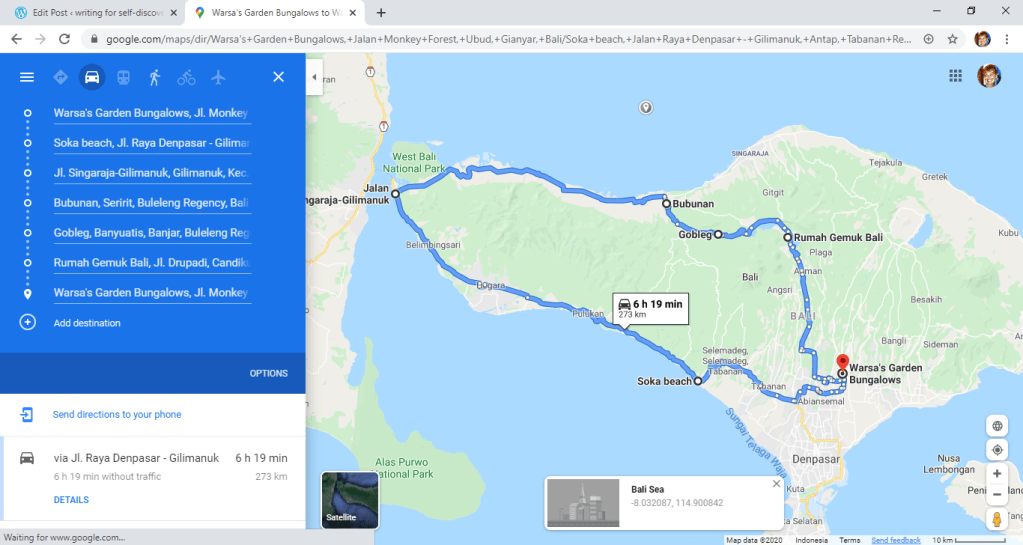
The corridor along the coast from Singaraja to Denpasar is a thoroughfare for industrial trucks barreling their goods from Java to Bali through the port of entry at Gilimanuk. Those drivers are notorious for passing motorbikes within a hair’s breadth of contact. But the deserted back roads are potholed and tend to disappear in the most inconvenient places – like at the bank of a river that has no bridge. With corona protocol requiring an expensive test before truckers are admitted to the island, I thought there might be significantly fewer of them on the road. Ketut agreed that now would be a good time to go.

We set out at 8:00 a.m. The weather app showed pure sunshine for our entire route.

“Ayo!” I whooped as we left our narrow gang. And we were off.

By 9:30 we’d reached the western coast of the island. I was ready to stretch my legs and fill my lungs with the humid saltiness of sea breezes. Ketut swerved off the highway at a sign that said Soka Beach. With the exception of two fishermen and a group of men landing a boat, we had the place to ourselves. After a short stroll we bought coffee at a tiny warung and contemplated the next leg of the trip.

My first long outing on the back of Ketut’s motorbike nine years ago took us to Balian Beach. It was a hidden stretch of sand with interesting rock formations and cows grazing in the background. I was eager to revisit that enchanted spot.

“Do you think you can find it again? Remember that old sign and the rocky path to the water?” Ketut remembered and assured me he could find it.

What a difference nine years makes. An entire town had sprung up where none used to be.

“Where’s the beach, Ketut?” I kept asking and he finally spoke my fears.

“No more beach, only hotels.”

I processed for a while, wistfully, as we sped along beside the water. Progress. Growth. Change. I’ve changed, too. The whole world has changed.

With that I let it go.

Everything ahead of us was new territory. The flat land rolling past alternated between groves of stately palms and glistening paddy fields. Mesmerized, I drifted into a meditative trance and was jerked awake when the bike stopped. “Famous statue,” Ketut said.

Towering over us was Patung Makepung depicting the water buffalo races held every year in this area of Bali. Winter surf broiled onto the rocky stretch as far as the eye could see.
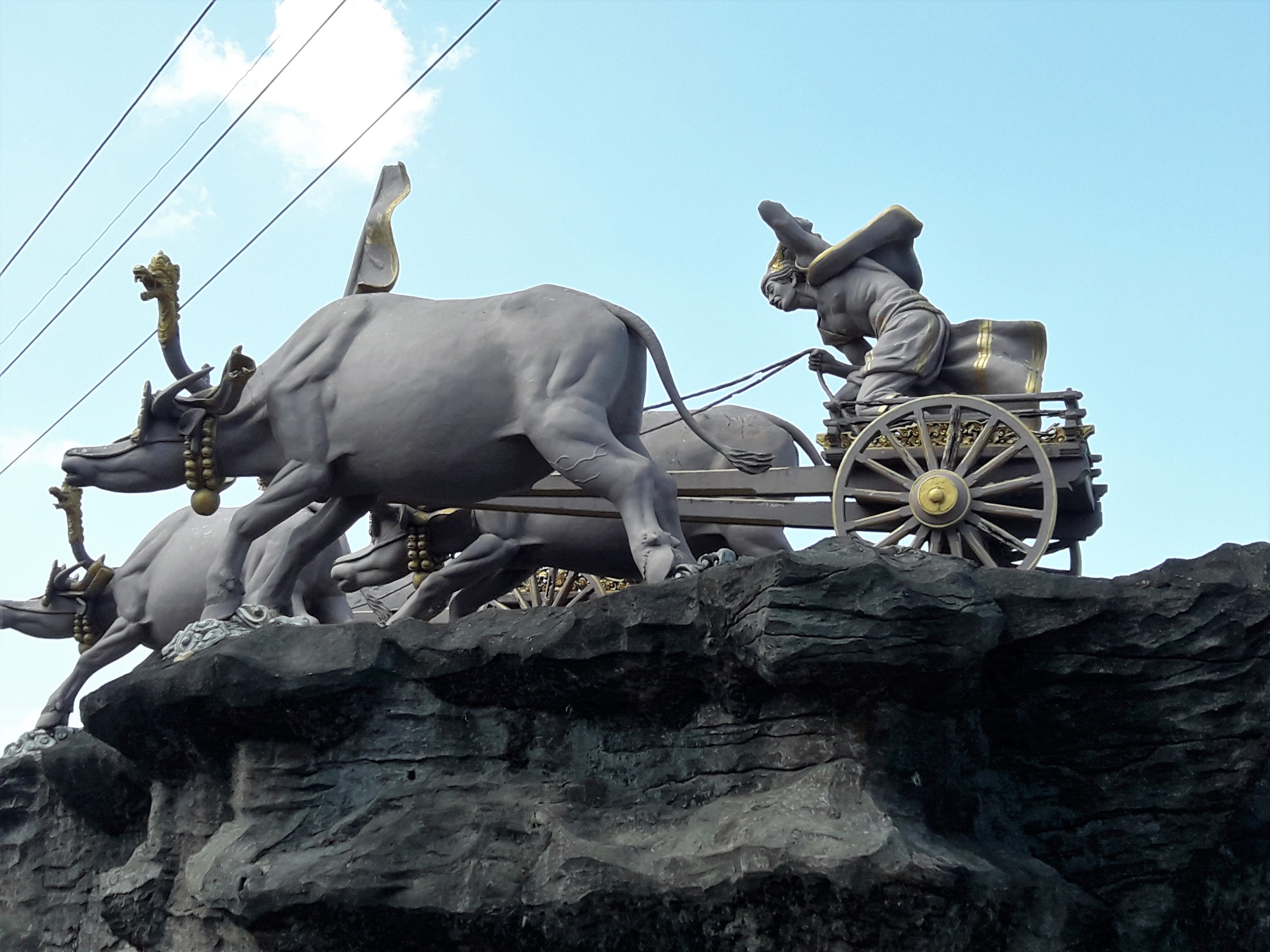
“Where are we?” The wind grabbed the name he spoke and blew it away. “What?” I shouted. He pointed to a row of rocks behind me. Red paint spelled out Pantai YEHLEH. Yehleh Beach. I checked Google maps. At 10:30 we were barely one-quarter of the way into our journey. I did the math. What was supposed to take a total of under seven hours, according to Google, by my calculations added up to ten. With no stops.

I sorted through a flurry of thoughts. Could my back, neck and bottom take another 7.5 hours on the motorbike? Would Ketut’s energy hold through the mountains still ahead? With the COVID shutdowns, would we be able to find lodging for the night if that was necessary? Should we alter our route while we still could? By now we were back at the bike, putting on our helmets.

“It’s still far, Ketut. Do you think we can do this?”

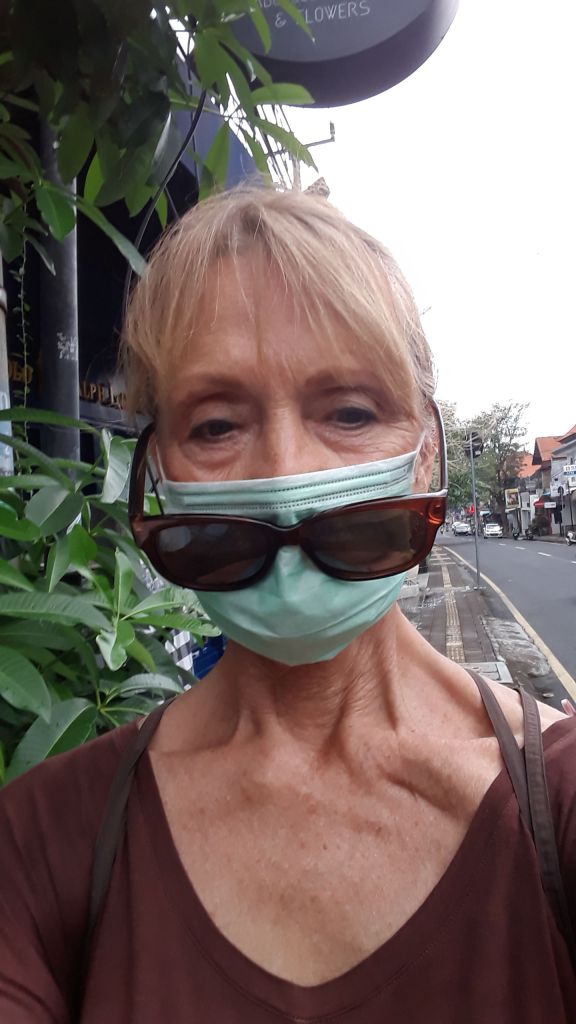
“You okay?” he asked, trying to peer through my sunglasses, mask, visor…

“I’m okay. You?”

“Ya. Good. No trucks.”

“That’s great! Okay! Let’s go!”

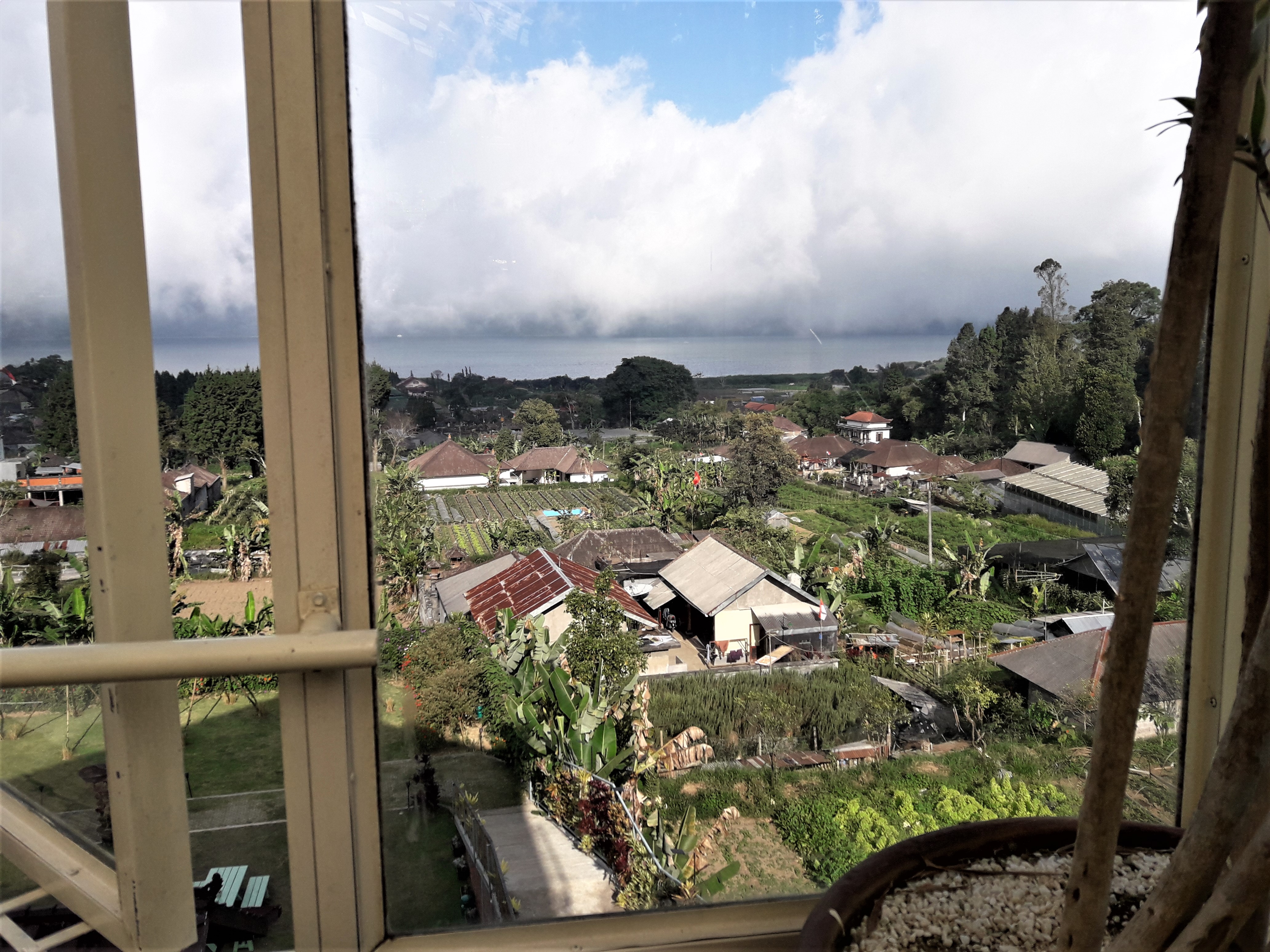
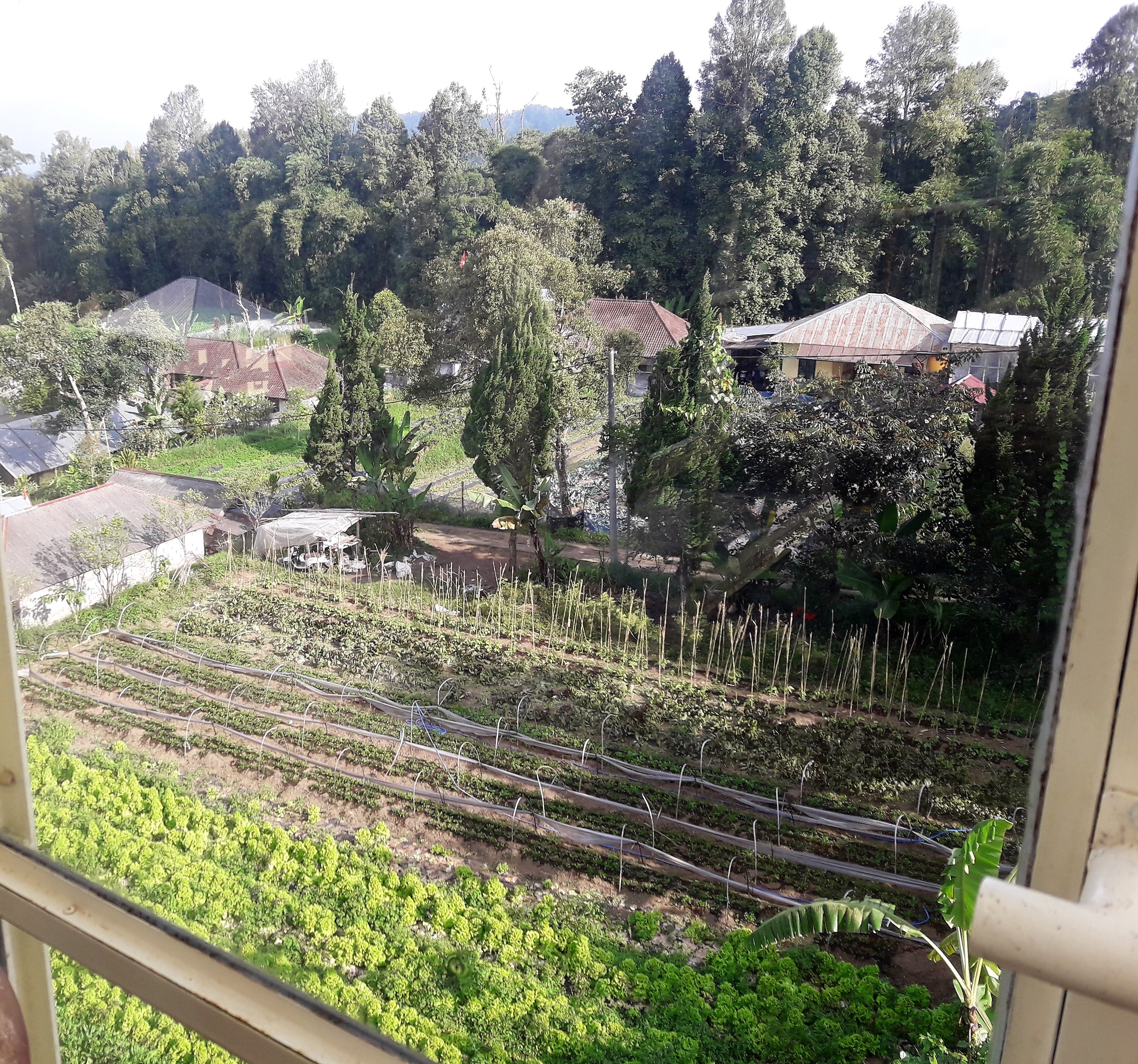
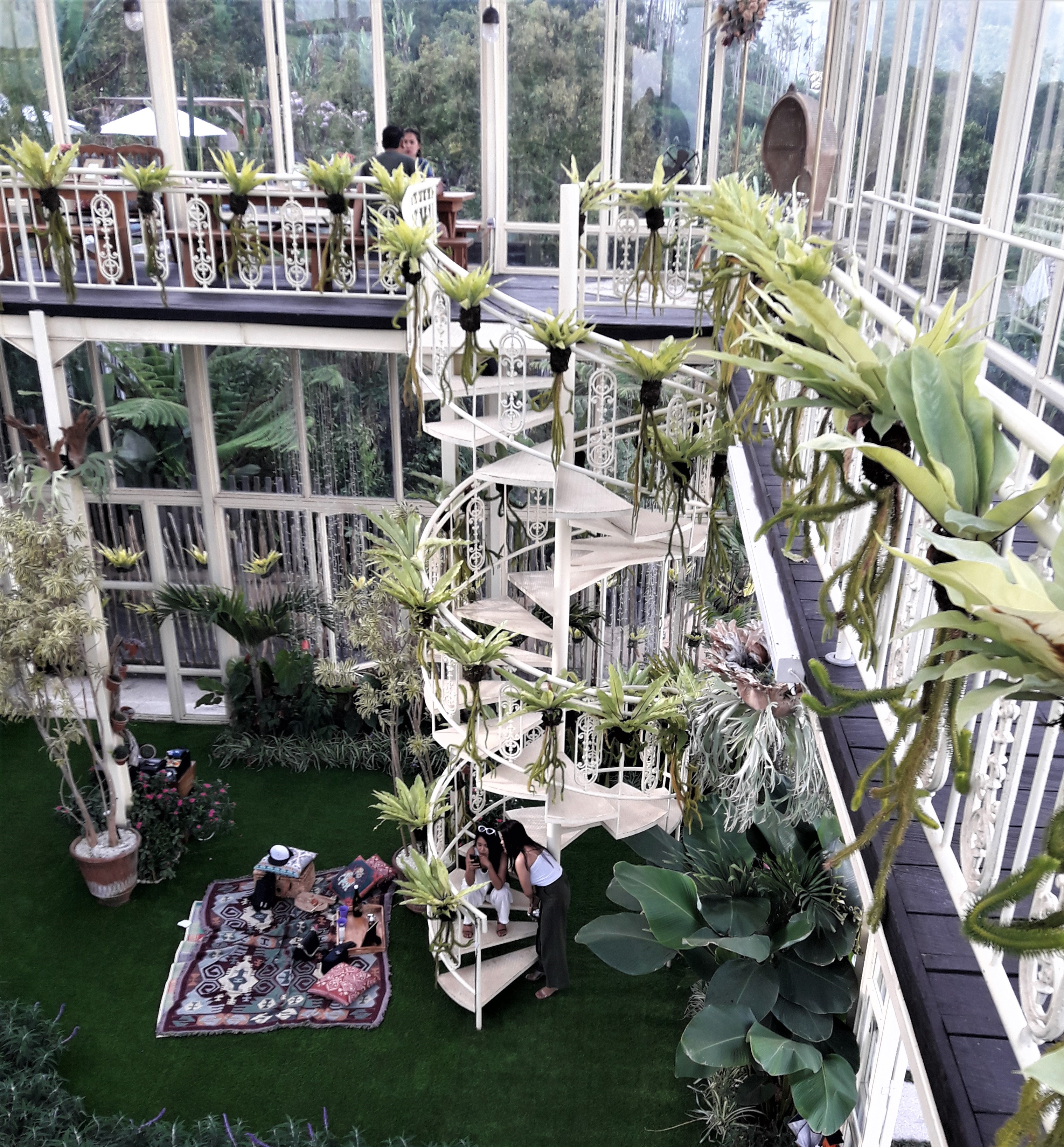
I have to admit, there was a driving force beyond my insatiable desire for adventure. That morning I’d been reading Indonesian news and up popped an ad for Rumah Gemuk. Translated that means Fat House. But the picture was a piece of enchantment so tantalizing it cancelled out my negative response to the name. Rumah Gemuk, I discovered, was a restaurant on the side of the mountain overlooking Lake Beratan. It offered picnics on the grounds or you could dine inside a glass mansion amid the clouds. It had amassed five stars. The reviews were inspiring and the pictures, magical. I was hooked.

And it was directly on our path home.

At Bubunan village we took a sharp right and started climbing. I’d never seen the mountainous area around Munduk, home of one of Bali’s famous waterfalls. Nor had Ketut. Nor had his aging motorbike. We labored up the switchbacks, higher and higher. When we reached a plateau Ketut breathed a sigh. “Already the top,” he said. Around the next curve the road went into a near vertical incline. “Whaaaat?”

Ketut can make that word sound funnier than any joke. As we continued to climb I lost track of the times the scene was repeated. Already the top…Whaaaat?…Now the top…Whaaaaat? I don’t love heights and there were moments, looking over an unprotected edge to the bottomless plunge below, that were gasp-worthy.

I can’t even begin to describe the views. The images I did capture were embarrassingly inadequate. We caught glimpses of Lakes Tamblingan and Buyan as we traveled the northern ridge above them.

I’d been tracking our progress on my phone but service kept dropping out. I wanted to save enough juice for a few more photos. I knew we were getting close.

“My battery’s almost dead, Ketut. If I turn my phone off can you watch for a sign for Rumah Gemuk? It’s before – you know that water temple – Ulun Danu Beratan?”

He knew.

We slowed to a crawl, both of us straining to read the litter of signage lining the street. Suddenly he took a hard right onto a strip of blacktop that wasn’t much more than a path.

“Where are you going?”

“This is it,” he said.

“How do you know?” I couldn’t believe a grand glass mansion would have such an understated approach.

“The sign,” he said. I hadn’t seen a sign. I was primed to argue when right in front of us, towering over a huge parking area, was THE crystal palace.
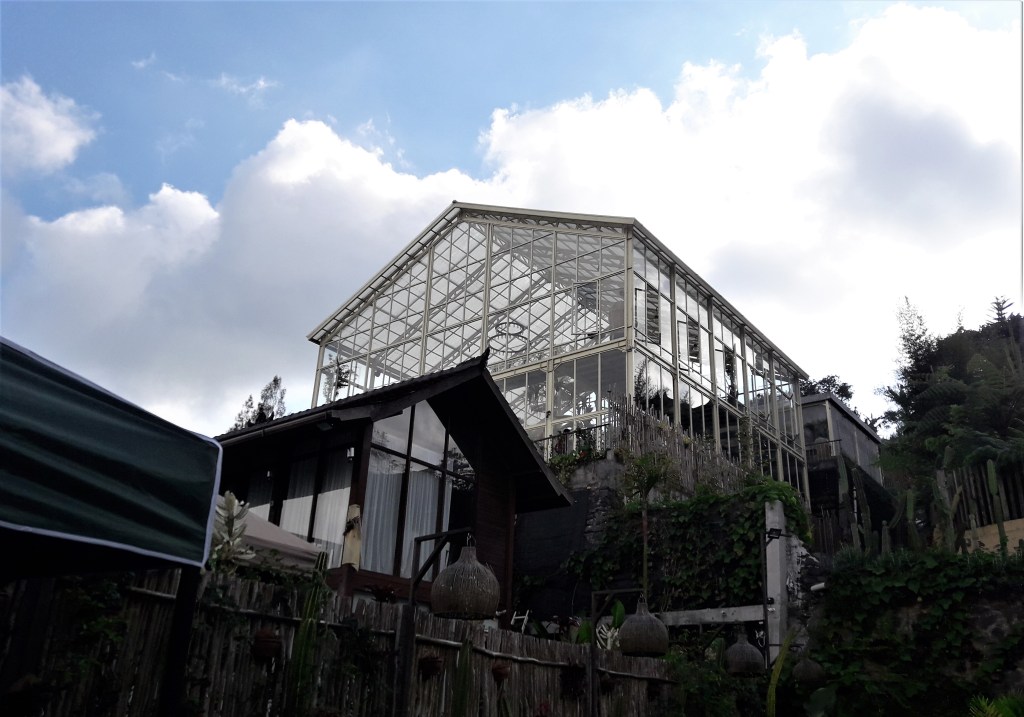
“It’s there! There it is! Wow Ketut! How did you know?”

“The sign,” he said – again.

Bless Ketut. Bless, bless, bless, Ketut. Every day. Every hour. What a gem.

I took a minute to comb the snarls out of 8 ½ hours of helmet hair, twisted it up in a topknot, and hoped I looked less wildebeest than I felt. “Salon,” Ketut said, and laughed.

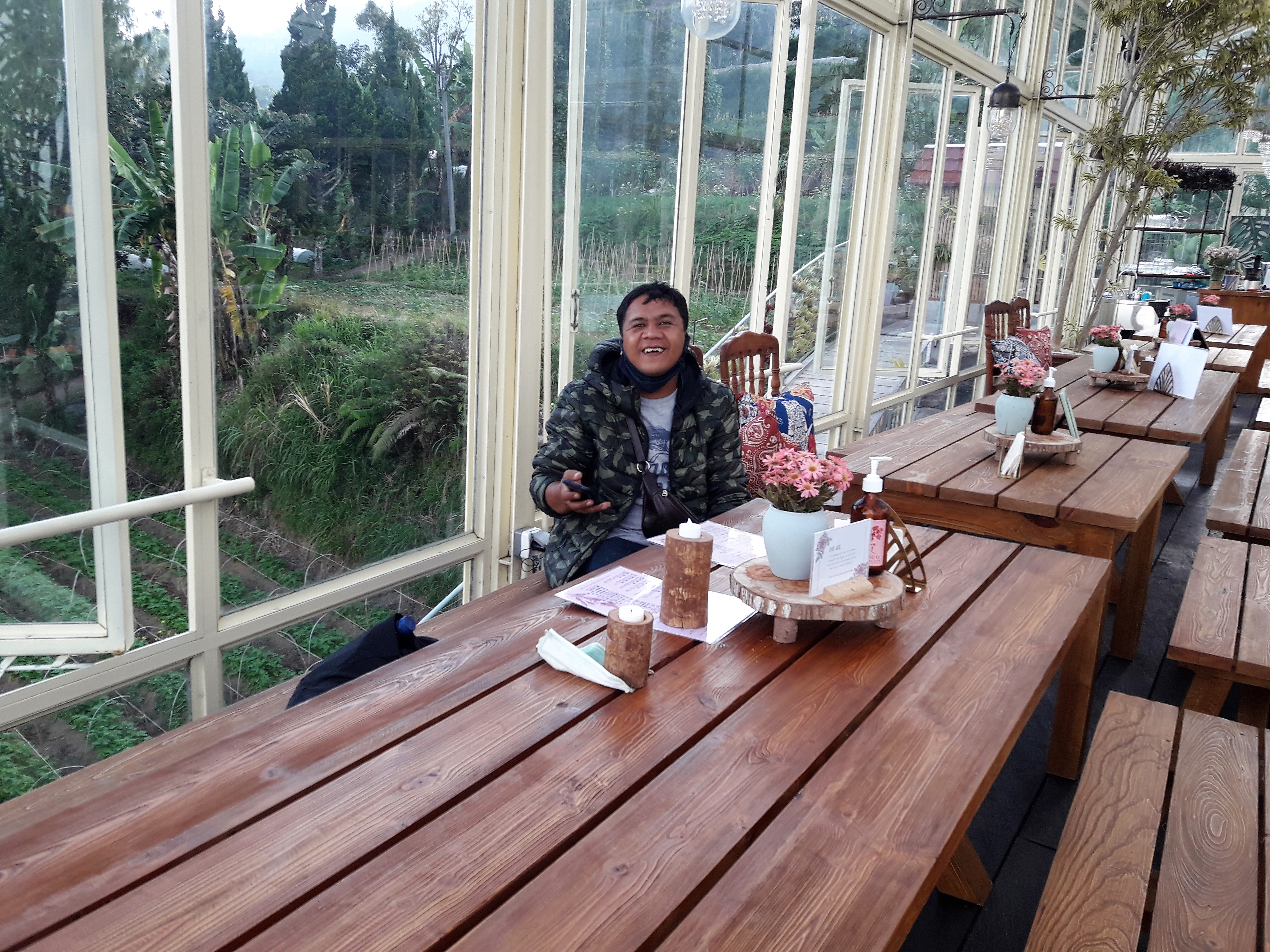
After the host introduced us to the dining options available, I snapped his photo and accepted his offer to do the same for us.

I was being silly – so relieved to be off that motorbike!

We proceeded up the outside stairway to the second floor and entered dreamland. Why had I never heard of this place? For the next thirty minutes my mouth hung open and my camera clicked.

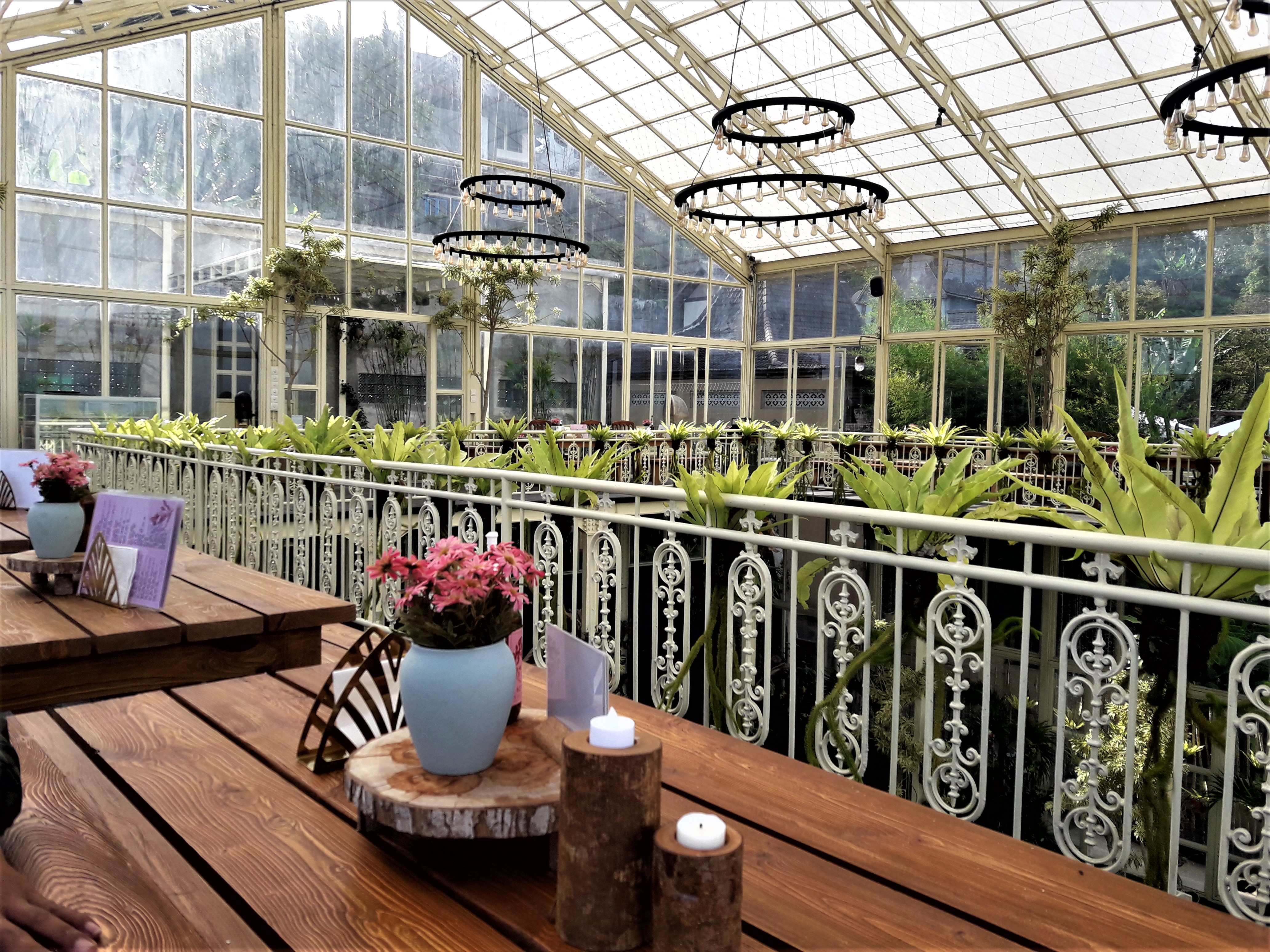
There were only a few people there, domestic tourists I guessed, from other parts of Indonesia. “All young,” Ketut observed and I realized that he was probably older at thirty-seven, than any of them, the wait staff included.

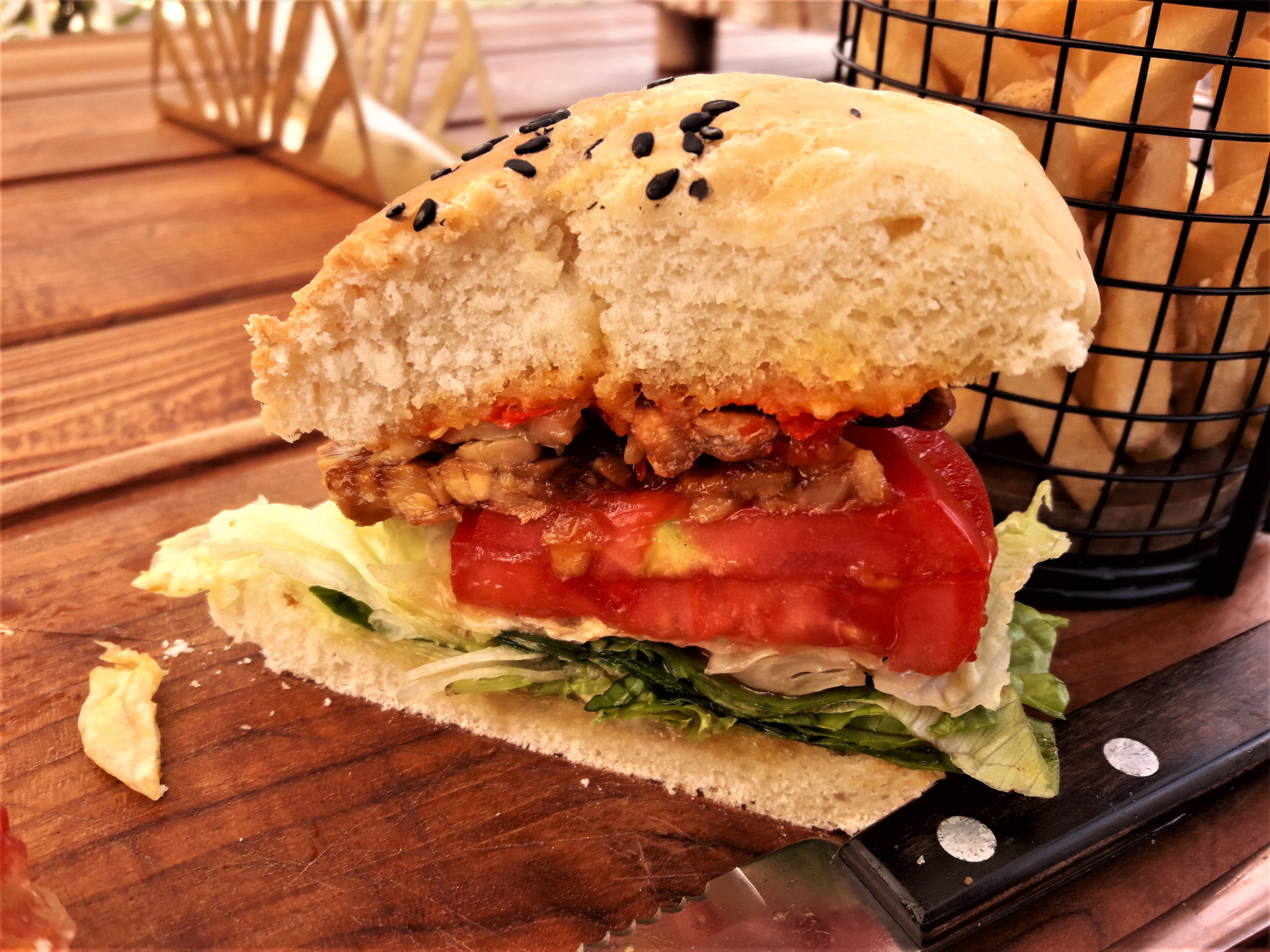
I finally calmed down enough to look at the menu. There was something for everyone. Ketut ordered fried rice with chicken and I had the vegan burger and fries. The subtly sweet sauce on the tempe gave extra pizzaz to the mouthwatering meal.
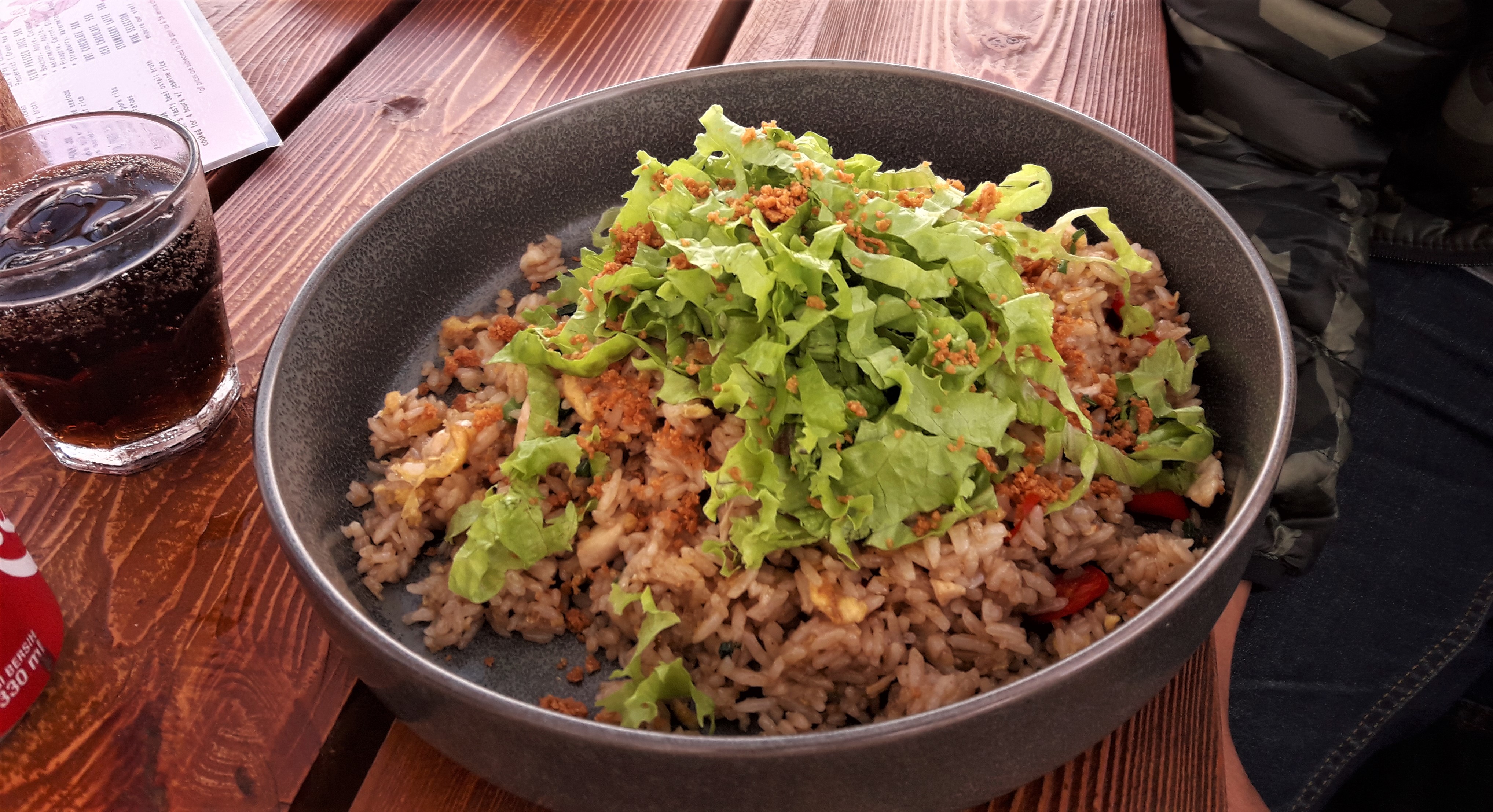
It was one of those exquisite moments that I never wanted to end. But Ketut, the voice of reason, said we had 2 ½ hours of riding to get home and the sun would set long before then. It was time to go.

From Bedugul it was all downhill to Ubud – or so it seemed. Time flew and so did we. Twice Ketut did his, Whaaaat? reversed the bike, and retraced to where he’d made a wrong turn. How anyone can find their way on unmarked roads in the ink-blackness of Bali nighttime, I don’t know. Even with a couple of backtracks, the 2 1/2 hour trip took two hours.

We pulled into the yard. I hauled myself off the bike, thanked Ketut, told him to sleep all day tomorrow because I intended to, and dragged myself upstairs to my cozy nest. I shed the helmet, mask, scarf, and checked the time. 7:08. We’d been gone eleven hours. At least nine of those had been on the motorbike.

In the bathroom I found the hotter-than-sin Kapak oil and massaged it into my body from the base of my skull to the bottom of my butt cheeks. As the hot/cold sting seeped into my muscles I smiled. Even if I can’t walk tomorrow, this day was perfect. It was the last thought before I drifted off to sleep.

HOLES

I feel like I’m trying to stitch up the holes in this new reality with old thread. It’s weak. The colors don’t match and it breaks when I pull it tight to close the gap. I have the sense that the holes aren’t meant to be stitched. That this is different cloth designed to expose what’s been ignored and wants to be seen.
It seems the whole of humanity is wearing this same cloth. Some are clawing at it, trying to tear it off. Some are gazing through the holes seeing parts of themselves they’ve never seen before, awakening to new passions with purpose and zeal. Others, like me, are slowly relinquishing the needle and thread and opening our eyes.

I think it’s begun to sink in that what once was will never be again. There’s no going back, and the way ahead is as obscure as San Francisco when the fog rolls in. There’s no new normal – only new.

We have a window of time, right now, to prepare.

At least some of us do. Others are rushing out every day, exhausted and sleep-deprived, to care for the sick. Some are running herd on children who would otherwise be in school, possibly trying to squeeze in a full-time job that also has to be managed from home. Many others have lost jobs and are homeless, struggling to survive.

The rest of us wallow in an abundance of time that arranges itself differently than before. I’ve become accustomed to Bali’s ‘rubber time.’ I’m used to losing track of days. Sometimes entire months go missing. But COVID has brought an additional level of strangeness to the equation. Now there’s an absence of time. We’ve been sucked into a vacuum that feels endless and motivation stagnates.

So when I say we have a window of time to prepare, it’s prudent to ask, ‘Prepare for what?’ No one can answer that question. It’s the HOW that’s important. HOW do we prepare ourselves for the unknown ahead?

Raw material is plentiful. We’re it.

Our minds, bodies, and emotions are ripe for new management. We can’t approach a paradigm shift with old expectations and worn-out patterns. In many cases, even our dreams must be revised or replaced.

It’s an opportunity to reflect on the past and assess what we want to carry with us into the future and to determine what is excess baggage and has to go. The current chaos is calling us to center and conserve our energy – to form a sea of tranquility in the eye of the hurricane and that’s no easy task.

I’m paying far more attention to intuition than ever before, heeding subtle nudges, seeking to increase awareness and strengthen deeper ways of knowing. By so doing, I’m creating a version of myself that will survive the challenges of this unparalleled time. I’m revising hopes and rewriting responses. I’m seeing that NEVER was yesterday and no longer applies. Options I wouldn’t have considered a week ago are now viable. I’m studying this unfamiliar person with befuddled curiosity.

Under pressure, rigidity breaks. Flexibility bends.

I want to learn this lesson the first time. I know a bit about lessons: if we don’t nail it, the next will strike with force so brutal there may be nothing left to salvage.

This reality that covers us with a strange cloth full of mystifying holes is urging us to take stock of ourselves. To view this as opportunity rather than disaster.

I, too, have lost a dear one to the virus. I’m on the other side of the world from my children and grandchildren and all plans to visit are cancelled for the unforeseeable future. Thankfully, my home here is secure. But there is a deep sense of grief and loss every day.

And yet, another part of me sits in awe at what I’m being allowed to experience in this lifetime and I’m determined to make the most of it.

The Corona Effect – Can you explain it in eight words or less?

Clouds pile up like mounds of gray wool on a shearing floor. Staring into them, half meditating, half daydreaming, I’m reminded my lesson today is presence. Take time. Be in the moment. Feel the breeze. Smell the incense. In the distance, wind chimes clunk their hollowed-out happiness.

And there’s that other sound.

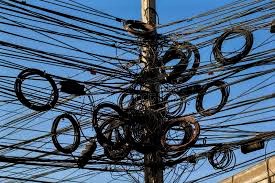
When I first moved to Bali I blew up a hair dryer. It gave me a healthy respect for 230 voltage – a bit different from 110, standard in the US. I assumed the buzzing sound I heard throughout the day, all day, every day, was that powerful current ripping through the tangle of wires festooned overhead.

Several months passed and I was visiting a mountain village. There were no wires yet the humming persisted. I asked a local, “What’s that sound?”

Jangkrik,” he said.

“Electric?” I asked, thinking I’d heard wrong.

He repeated it very slowly, “Jaaaangkriiiik,” opening his mouth long and narrow for the first syllable, then wide and toothy for the second, looking at me in a way that communicated his sympathy for my obvious mental inadequacies.

I had him write the word.

When I got home I typed jangkrik into Google Translate and hooted.

Cicada.

All this time those humming wires of my imagination were simply thousands of little bugs singing their lungs out.

So back to the sights, smells, and sounds of this morning…

I wanted to add cicadas to my opening paragraph and say they sounded like the buzz of overloaded electrical wires. But it dawned on me there might be an actual name for that occurrence.

Google to the rescue – and I kid you not. That high-voltage phenomenon is called the Corona Effect.

This kind of thing happens to me all the time. What are the chances I’d google that today, or ever for that matter? But I did, and when I read this part of the definition, I knew why.

Corona discharge from high voltage electric power transmission lines constitutes an economically significant waste of energy…

The corona discharge of this pandemic is:

  • Uncertainty
  • Misinformation
  • Restriction
  • Loss of income
  • Depression
  • Illness
  • Death

Its effect is a significant waste of energy, and managing the reality and the fear around so much negativity requires conservation of resources. The only action that seems to accomplish that is to be fully in the present.

If you were inside my head today, you’d have heard my new mantra:

This is a precious moment of life. Don’t waste it worrying about the future or regretting the past. Engage fully with this moment and be grateful for all that’s good, right here, right now. That’s enough.

Until now my nervous system has been a victim of the Corona Effect, twanging away on overload, leaving me permanently exhausted. Today was different.

I love this teaching by Thich Nhat Hanh –

If while washing dishes, we think only of the cup of tea that awaits us, thus hurrying to get the dishes out of the way as if they were a nuisance, then we are not “washing the dishes to wash the dishes.” What’s more, we are not alive during the time we are washing the dishes. In fact we are completely incapable of realizing the miracle of life while standing at the sink. If we can’t wash the dishes, chances are we won’t be able to drink our tea either. While thinking of other things we are barely aware of the cup in our hands. Thus, we are sucked away into the future — and we are incapable of actually living one minute of life.

Today I washed the dishes to wash the dishes.

Shhh #nofilter Do I dare tell the truth?

Usually I post a blog when inspiration strikes which has been happening about once a week for several months now. Ideas flow, words come, and a somewhat cohesive piece of writing materializes.

This week arrived.

I waited. Fished around in my subconscious. Looked at old notes jotted on random scraps of paper. Pulled tarot cards…

The cards had plenty to say, but the messages were personal, nothing anyone else would find interesting.

Today, still at a loss, I took time to reflect on the weeks leading up to 2020. What thoughts circled as I approached my 70th birthday? What questions followed me to Italy? What conflicts arose? What has resolved? What’s still bubbling in the stew-pot?

Relationships. It’s been all about relationships.

I’m a listener, non-confrontational, looking out for the emotional needs of others, rarely revealing my own. My mother’s instructions have dictated my behavior for sixty-nine years: If you can’t say something nice, don’t say anything at all. And this one: If you listen, Sherry, you’ll always have friends. People aren’t really interested in what you have to say.

Double whammy. Ouch! Ouch!

Mom was a product of her upbringing and raised ‘Minnesota Nice’ daughters. I don’t fault her. But approaching the seventh decade of my life, all that listening began to feel like really old news. There was something deceptive about it and the more I watched myself in that role the more disgusted I became.

In my fifties I did a fourteen-month course in grounding meditation. During a one-on-one session with the leader she asked me, What do you want more than nice? I answered, Truth, then went on my merry way being nice.

That element of my identity was obsolete. It needed to be let go and mercifully allowed to die.

Facing the momentous birthday looming ahead, self-loathing bubbled within. Why hadn’t I changed? Why was I still being The Insipid Ms. Nice? What part of myself didn’t I want others to see? Nothing seemed to have more urgency and importance than transparency and honest communication. I craved it with every cell in my body.

I told my daughters I loved them but I was on a truth-telling rampage and I hoped they wouldn’t hate me forever if I actually spoke what I was thinking at times. During a conversation with my youngest a few days later, I was clicking along the old track asking questions, hiding in the shadows, when all at once she said, Mom, stop. Tell me about you.

With her words a layer of my psyche that feared rejection, confronted me.

I saw in a flash that I couldn’t just snap my fingers and, presto change-o, the authentic and honest-to-a-fault Sherry would show up. I committed to doing the work, whatever it took, to stop playing safe and get my skin in the game.

The Universe took note and brought me face-to-face with people who challenged my intentions in the most unique and unexpected ways. There are methods for handling honesty with diplomacy and grace, but like a toddler taking her first wobbly steps, it was a skill-set I hadn’t mastered. And yet, the feeling of embodying my whole self for perhaps the first time ever, helped me see beyond the collateral damages of those first disappointing attempts.

Then I left for Italy.

If ever there was a culture of direct, honest communicators, Italians epitomize it. They’re open about their emotions, state their points clearly, and expect the same in return. What that accomplishes is an atmosphere of relaxed acceptance. You know where you stand and what you say is taken at face value. My visit there couldn’t have come at a more opportune time. I had exceptional role models for exactly the kind of transparent person I hoped to become.

As I returned to Bali, COVID hit hard. That was five months ago. The pandemic hasn’t let up and as physical masks go on, psychological masks come off. People are ground down to their essence. Everyone is living closer to the bone than ever before. It’s bringing out the worst and the best in us but rarely anything lukewarm. Truth is raw and exposed. We’re learning what’s important and who our friends are.

But here’s the thought I want to leave with you.

This is not just a random difficult time. It’s a destined milestone along our soul path. In relationships the other person is not the point. If we’re triggered by them, they’ve poked at a wound and it’s time that wound was opened, scraped clean, and healed. We’ve been given a rare, once-in-a-millennium opportunity to recognize how human we are, to see our warts laid bare, and tend to the business of emotional accountability.

It’s time for truth-telling – especially to ourselves.

Redefining Sanity – What’s Your New Happy?

There’s a lot written these days about preparing for the new normal. Some of it reads like dystopian fiction. Too often it seems to be magical thinking with little or no basis in fact.

Even though we’ve been watching the virus for several months, it’s still raging out of control in many places with no signs of slowing. A vaccine that will be delivered and distributed broadly enough to make a difference is still a fuzzy dream.

As I thought about that this morning I realized the only certainty right now is ongoing uncertainty and the people and activities that used to contribute to my sense of well-being are no longer available.

Everything is up for redefinition – including sanity – including happiness.

If I had experienced my current detours into mental strangeness before the pandemic, I’d have been worried. These days, feeling off-kilter, hopeless, adrift, unmotivated, confused (I could go on) is just the way it sometimes is, and I’ve learned a degree of acceptance and coping skills for the mood shifts that come out of nowhere.

But I don’t like coping. I prefer to thrive, mentally, physically, and emotionally and I realized today that to do that, I need to redefine happy. I’ve been struggling to fit the old ways into a new reality. It can’t be done. It’s like trying to keep an exploding rainbow intact. Bits and pieces of colorful joy break apart, fly everywhere, and disappear. I may grab one or two fractured shards as they zoom past, but that’s a starvation diet and it’s not working.

It boils down to expectations and there are two questions to answer:

1) When have I experienced happiness during corona?

  • I’ve been truly happy when engaged in projects that require physical effort.
  • I’ve been truly happy during Zoom calls with family.
  • I’ve been truly happy riding on the back of Ketut’s motorbike.
  • I’ve been truly happy when getting together with a friend – even sitting six feet apart.
  • I’m content when I’m writing, cooking, reading, walking, daydreaming.
  • I’m content when I have a plan for the day.
  • I’m content when I have something on the calendar to look forward to.
  • I’m content when I’m doing my morning routine.

2) How can I revise my expectations so they fall into line with what’s actually possible?

Things I can no longer expect are:

  • Hugs
  • Trips to see family
  • Group get-togethers
  • Spontaneous social interaction
  • Taking vacations
  • Leaving the house mask-less
  • Bustling streets
  • Restaurants and shops open
  • Feeling safe…

Comparing the two lists, I’m surprised how many things still exist that bring me happiness or contentment. I don’t have to be happy all the time. Contentment is an acceptable state. Hugs and a sense of safety are perhaps the most difficult to do without.

It will go a long way toward my new happy if I can incorporate a few items daily from the first list, and plan my days far enough in advance to feel I have an interesting life to look forward to. I’ll need time to mourn the loss of what isn’t possible. Time to honor what once was but is no more in an intentional way. But after that — theoretically —

I can release the old paradigm and embrace sanity and happiness, redefined.

Fly Your Freak-Flag High

There’s no denying it. The past four months have changed us.

Knowing what we’re all dealing with in some form or another, wouldn’t you think everyone would be a little kinder? A bit more compassionate? Patient? Longsuffering?

What I see isn’t quite like that.

The proverbial rubber, it seems, has hit the road. There’s a don’t-mess-with-me attitude weaving its tentacles into every area of life: friendships, partnerships, work, driving, waiting in line. It’s as though our BS meter is set on high: If you’re not going to level with me, don’t waste my time.

Irritation prickles on the skin – I feel it the instant I wake up – like a racehorse harnessed to a plow.

I’ve been doing things every morning to convince the horse that the plow is a good thing, that plodding instead of galloping makes time for a rich inner life. But in spite of that, too often I say Screw the plow! and mad-dash through the fields with that worthless piece of crap bouncing off every furrow behind me while I’m flying my freak-flag high.

And you know what?

It feels good. It feels good to shock myself, to think something I wouldn’t ordinarily think, say something I wouldn’t ordinarily say (like screw the plow), do things I didn’t do before (like cook), and stop doing things that once defined my life.

That’s the more difficult part to come to terms with – a loss of interest in what once occupied most of my waking hours. It’s like I went into the cocoon as a caterpillar but I haven’t yet emerged. I’m still marinating. The words of the woman who read my astrological chart in March of this year, haunt me. “Even if you thought you knew what was ahead for you, Sherry, you’d be wrong.”

That could apply to any of us and it’s probably the reason we feel a little strange in our own skin. It’s not knowing how to plan, not having a predictable future, not being certain that the virus won’t arrive in our homes on a lettuce leaf or under a fingernail, or wondering if maybe it already has. Things like that mess with the mind.

So here’s my challenge to you…

Fly your freak-flag high. Be the out-of-the-box wild-child you always wanted to be. Embrace whatever random ideas float through your mutinous mind and try them on for size. Trust me, they won’t all fit. But you get to choose.

Suddenly, in the middle of writing this post, I had to stop and actually make a Freak Flag. I don’t do crafts, right? That’s what I mean. Where do these compulsions come from? It took about five minutes to know exactly what I wanted.

Why don’t you make one, too, and let me know what yours says.

The mind on COVID – What’s happening?

I want someone who has studied the workings of the mind to tell me what’s going on with mine.

In the last few months I’ve become a fascinating creature very unlike my former self. Fascinating to me, that is. I doubt anyone else would find me particularly remarkable. It’s just that in less time than it takes to grow an onion, I’ve morphed into someone I don’t recognize.

I like things I didn’t like before. I take pleasure in doing things I didn’t want to do before. On the flip side…I’ve no interest in projects that used to absorb me for hours.

It’s involuntary. That’s what’s so weird. If I’d decided to take up cooking because I had time on my hands and it made sense, fine. But it wasn’t like that. I just woke up one morning with a maniacal urge to cook. There was no forethought, no pre-planning, only a fierce, single-minded compulsion and I knew if I did nothing else that day, I – would – make – food.

Crafty projects? Just shoot me.

That was before. Inspiration strikes frequently now. There was the plastic bag flag-string to deter bats. I had a hoot making it. I refinished my table top. The design for a veggie garden I dreamed up was implemented by Ketut – I was quite happy to delegate the actual work!

And today…

Stencil the steps.

Where did that come from? This isn’t the States. I can’t run out to Hobby Lobby, Craft Warehouse, or Michaels and pick out a stencil that tickles my fancy. If I want to stencil my steps I’ll have to come up with a design, find a piece of heavy plastic, transfer the image, cut it out…

By this time the old Sherry would have said, #@&%$ the steps! (The new Sherry doesn’t swear…HAHAHA!) But, no! The challenge energized me. By noon I’d Googled stencils, found one I loved, made a copy, taped it to an old laminated flier, and…

stopped.

The more I studied the image the less I knew how to proceed. Where did I want the paint to show up? Where should the concrete be left bare? How could I cut it so the holes were where I wanted them without the entire thing falling apart? Am I boring you yet?

Somehow I figured it out.

Several hours later I’d stenciled the left side of the steps, taken the paint-covered template upstairs, washed it, dried it, and flipped it over to use the reverse pattern on the right side. One more step to go…

And…

done.

My makeshift stencil worked. I hadn’t been one-hundred percent enamored with Ketut’s whitewash. It needed something. The indistinctness of the butterfly isn’t too dressy but it brings closure to an otherwise unfinished thought.

Which reminds me of my original question: What’s going on in my head?

It’s kind of fun being a stranger to myself – disturbing, too. What if I began changing in radical ways over which I had no more control than I do over the wild inspiration to cook or craft? Whoa! Way too much fodder for the imagination – scratch that.

I was starving after I finished the paint job. Google had a recipe for adzuki bean hummus. My mouth watered.

In no time I’d whipped up a purplish-brown bowl of the beany paste and sat down with crackers and a crisp, pinot grigio to write this post.

I’m sure I’m not the only one questioning my sanity after months of COVID craziness. What I’ve emphasized here are more-or-less positive manifestations of a mind deviating from its norm. Don’t misunderstand. It deviates in negative ways, too. But I keep those meanderings caged. I’d rather laugh, wouldn’t you?

Once Upon A Success!

There are many things I do well. I’m trying to think of one. Never mind.

I’ve been transparent about my shortcomings. My friends (you are my friends, right?) seem to enjoy hearing about my kitchen snafus. It softens the sting of failure to frame culinary disasters in the humorous light of story. Then, like so many other things in life we tell ourselves, the tale I’ve woven to make others laugh becomes my belief.

There. We’ve gotten the deep philosophical lesson out of the way.

No segue here – just stream-of-consciousness because my thoughts tonight are all-over-the-place and I don’t care if you see the scrambled brain I have to deal with to pull together a coherent piece of writing. By the end it will all make sense.

I hope.

I’ve noticed a change since isolation first began. Back then, I was diligent to a fault, going nowhere, washing every berry and leaf that entered my house and hanging my grocery bags in the sun for a few days to disinfect. At that time, Bali had one death and no active cases of the virus.

To be fair, I’d just come from Italy where infections were rampant and I was more than a little freaked.

That was four months ago.

Yesterday my gorgeous young neighbor came over for our weekly chat. Normally I’d have changed clothes, combed my hair, slapped on a dash of lipstick and at least attempted to be presentable. She was right on time, as always. My hands were in the dishpan. (We can’t hug anyway.) As I wiped them dry I shrugged and said, “Hey. I don’t know what’s wrong with me but I didn’t even try to get cute for you.”

Her explosion of laughter was no doubt heard in the next village. “I can’t believe you said that.” She shook her head to emphasize her disbelief. “Normally I’d find a tank top that was a little form-fitting but…” she grabbed a hunk of loose fabric. “These are my pajamas!”

The longer this altered reality continues the more relaxed I become, which makes no sense because now the numbers of cases here are climbing fast. This is when I should be ultra vigilant. But I seem to have expended all my survival energy in those first scary weeks.

Other obsessions have come and gone. Cooking, for instance.

At the beginning, cooking was something to do at home that helped pass too many empty hours that flipped over like a book of blank pages. Making food gave me purpose – and something to eat.

I couldn’t believe how much enjoyment I milked out of experimenting with new recipes in my limited kitchen.

And then…nothing.

The desire to cook left as magically as it had come. Jigsaw puzzles became the new time-eater to soften the brunt of nothing to do and all day to do it.

After jigsaw, my writing mojo miraculously resurfaced and I finished the novel I’ve been working on for three years…really finished it…the final rewrite…DONE.

Today, wonder of wonders, my desire to cook returned.

But this time I went with something tried and true, something I know how to do well: stove-top granola. And because it’s more delicious than anything you’ll ever find on the grocery shelf, and because I want you to believe I don’t fail every time, here’s my process in step-by-step photos so you can try it yourself.

WORLDS’ BEST GRANOLA

  • Prepare about 1 cup each of dried apricots (cut into pieces) and raisins then set aside
  • Put 1/3 cup cold-pressed virgin coconut oil in a non-stick frying pan
  • Add 3/4 cup each raw sesame, pumpkin, and sunflower seeds
  • On top of the seeds add 2 cups dried coconut flakes
  • Pour 4 cups rolled oats on top of the coconut flakes
  • Thoroughly mix so the oily seeds are distributed throughout
  • Turn gas flame on high (electric range owners you’re on your own)
  • With a broad spatula continuously rotate the contents at the bottom of the pan to the top so it doesn’t burn
  • When the coconut flakes start turning brown (about 4 minutes) remove the pan from the heat but continue stirring for another minute while the pan cools
  • Mix in the apricots and raisins

Now comes the secret that makes this granola the worlds’ best…

  • Add 1 1/2 teaspoons of salt (I use pink Himalayan salt but it’s not required) to 1 teaspoon powdered stevia leaf and mix well

Warning! Do NOT use the white, processed, sugar substitute with the disgusting aftertaste! Use pure stevia leaf. It’s green.

  • Sprinkle one-half of the salt/stevia over the mixture in the pan. Stir well then sprinkle the rest and mix again.

The salty-sweetness without a trace of sugar makes this not only the world’s best granola, but very possibly the world’s healthiest.

WALLAH!

This Corporate Escapee loves her granola. And how about that? I didn’t try to get cute for you, either.

How to Avoid a Glaring Failure of Epic Proportions

I’m not talking about the very recent rally in Tulsa, Oklahoma, although I could be.

There’s an old adage: ignorance is bliss. Operating on that assumption, I set about making my first ever batch of naan, that fluffy, flavorful accompaniment to an Indian meal.

My expectation for favorable results was understandably optimistic because this time I had all the ingredients. No substitutes. Cooking in a skillet on top of the range was listed as an option. The stars were aligned.

I stirred the yeast into lukewarm water with a tablespoon of sugar. It frothed perfectly. I thoroughly blended yogurt, oil, and salt into the flour until crumbly then slowly added the yeast mixture. The directions said to knead the sticky dough for ten minutes and it would become elastic.

I kneaded.

If too stiff, add more water.

I added more water.

And kneaded.

After ten minutes the dough, in my humble estimation, was more like concrete than elastic. But I covered it with a damp paper towel and set the timer for two hours after which, according to the recipe, it would have doubled in size.

The waiting was productive. I finished The President is Missing, co-authored by James Patterson and Bill Clinton. I don’t usually read thrillers since I find life quite thrilling enough as it is, thank you. But it was on my shelf and once started I was hooked.

The timer buzzed.

I peeked under the paper towel at a lump that hadn’t changed one iota in size. Maybe the dough was too stiff. Should I add more water and give it another two hours?

I took a quick peek at the next series of directions. Form dough into balls the size of lemons. Pat flat on a floured surface and bake until brown spots appear. Flip and bake the other side. I decided if I could create a patty that would hold together while transferring from counter to pan, I’d proceed.

I scooped out a lemon-sized lump and sprinkled the countertop with flour. In spite of it’s density, the dough responded well to my patting. The pan was hot. I plopped the unbaked disc into the skillet and hovered over it waiting for pillowy bubbles to appear.

That didn’t happen.

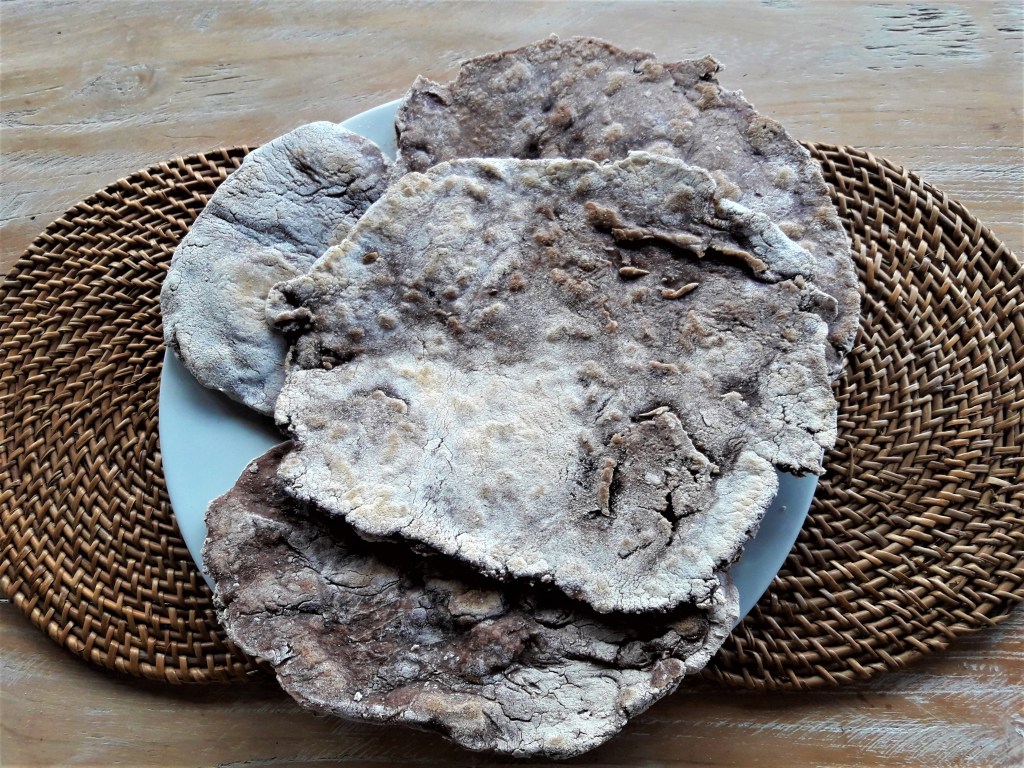
After about four minutes the underside had browned. I flipped it. Four more minutes and it was done. But instead of the hoped-for pliable, bread-like consistency, my naan appeared to be the close cousin of a saltine cracker. I broke off a piece for a taste test to determine the fate of the remaining dough.

The flavor wasn’t bad, a bit like the Norwegian flatbread of my youth. I patted and baked the rest of the lemon lumps and had a fine meal of red lentil stew with my crispy naan.

But what, oh what, had gone so terribly wrong? I’d followed the recipe to the letter. I had all the right ingredients. Or did I?

A question lit up like neon in my brain. Does yeast need gluten to rise? I Googled it and what do you know: gluten captures carbon dioxide given off by yeast – which makes the dough rise. My first ever order of banana flour had been delivered the day before. It simply hadn’t occurred to me to question the use of that gluten-free substance in my naan experiment. No wonder I’d had a solid lump of banana-flour concrete that refused to budge.

Ignorance is not bliss. Ignorance is ignorance, and it can be the difference between success and failure.

After the dream…what?

Sometimes I feel almost normal. I wake up without hyperventilating. The sunrise is splendid. Roosters crow and doves coo. The aroma of my neighbor’s coffee prompts me to brew my own. The beans are organic Kintamani Arabica and they’re almost gone. Mental note: order coffee.

By this time I have a plan for the day. I’ll take a walk.

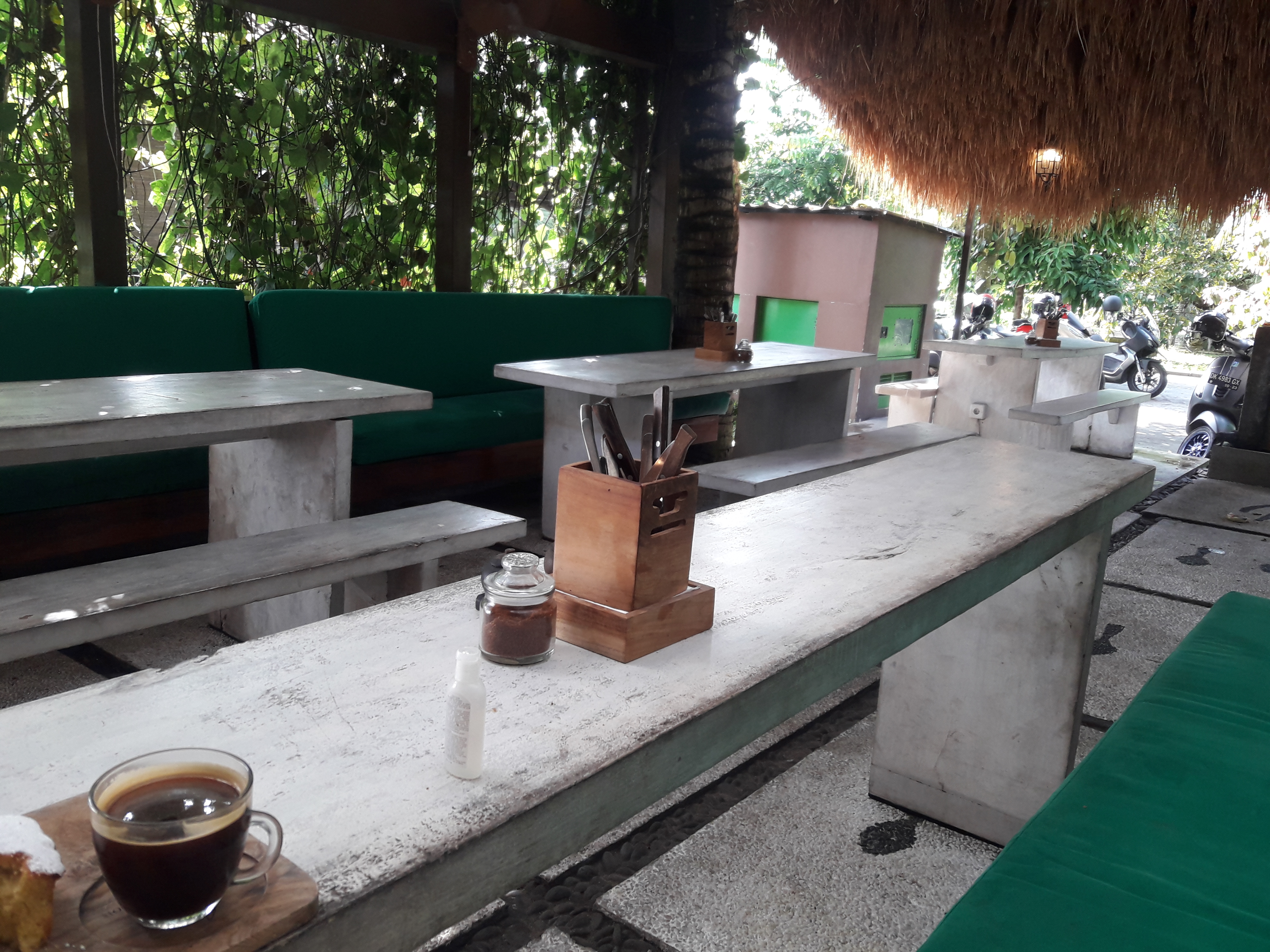
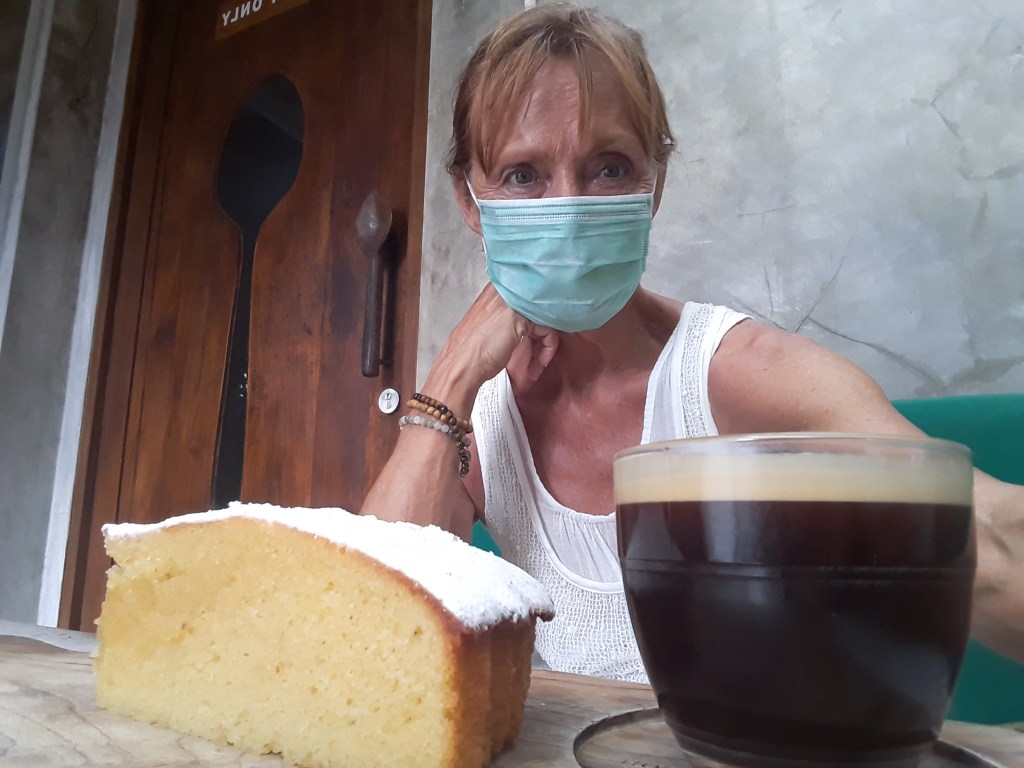
Trust me, it’s a plan. For three months I barely left my house. Now there are a few – very few – cafes opening and I’ve begun to venture out. First there was Monsieur Spoon for coffee and almond cake. I was a bit traumatized – can you tell?

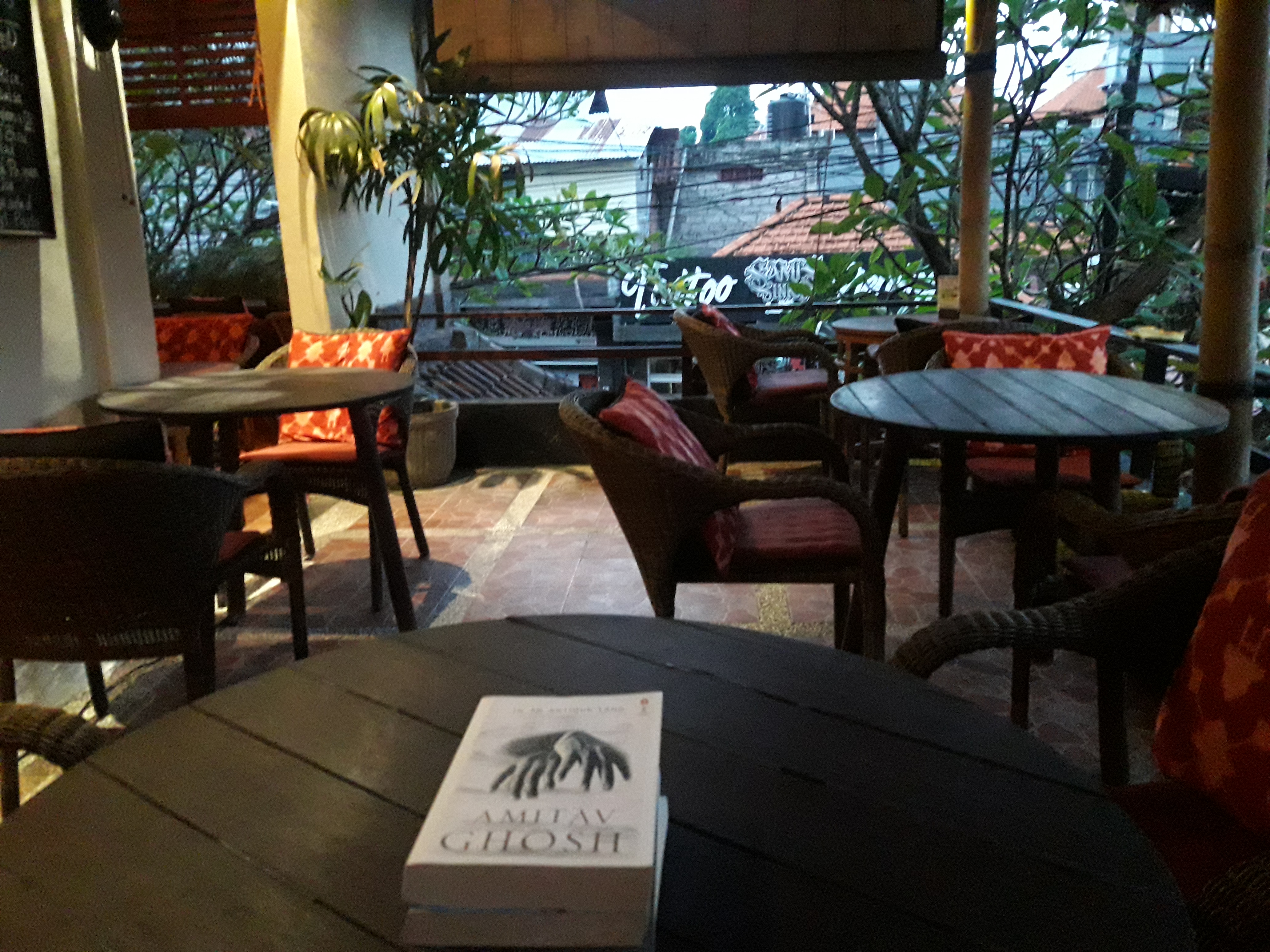
Then a daring evening out at Mingle.

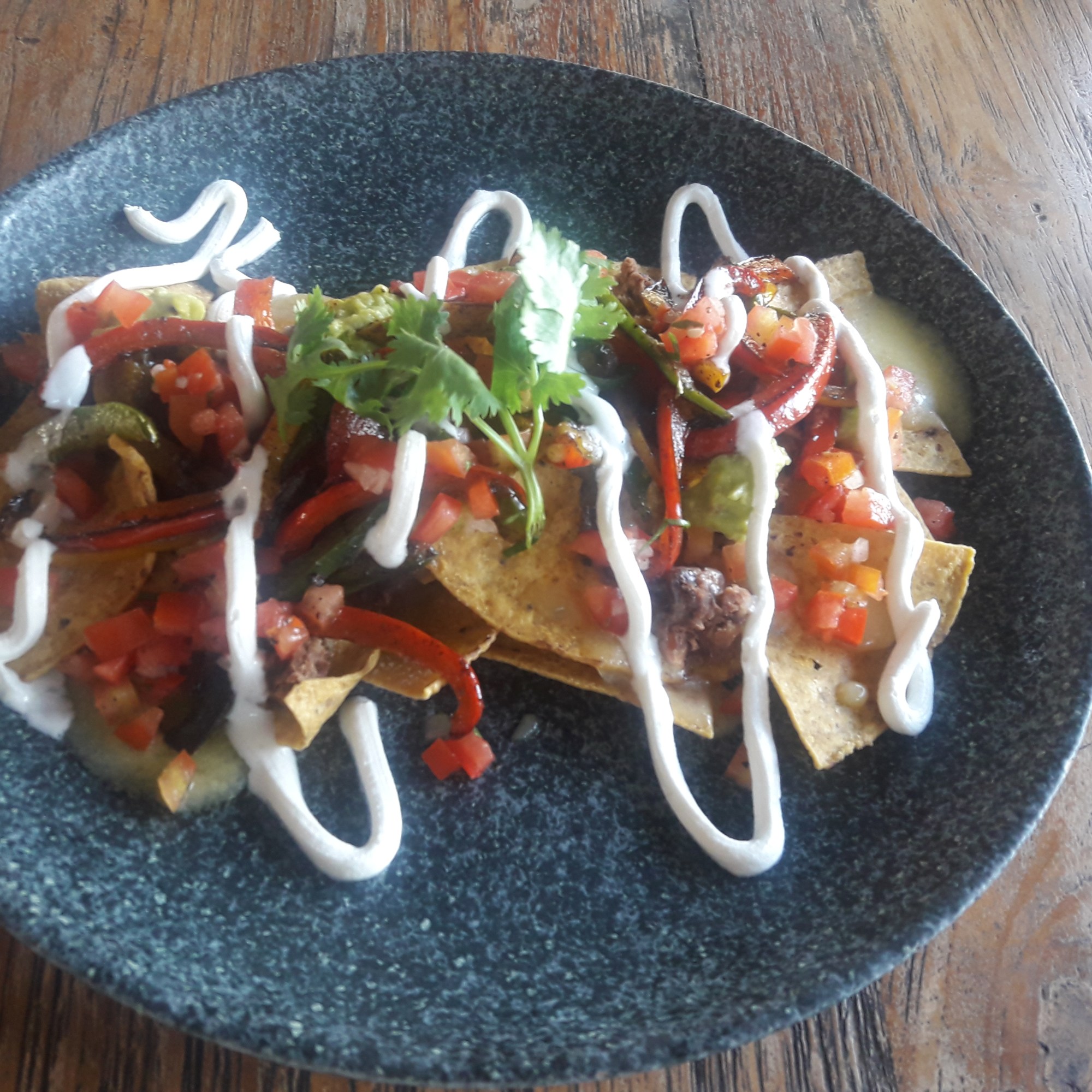
So far so good. This week I tried Tropical View, a picturesque restaurant overlooking a rice paddy next to Monkey Forest. The nachos were great.

Perhaps you’ve noticed a consistent theme…

No people.

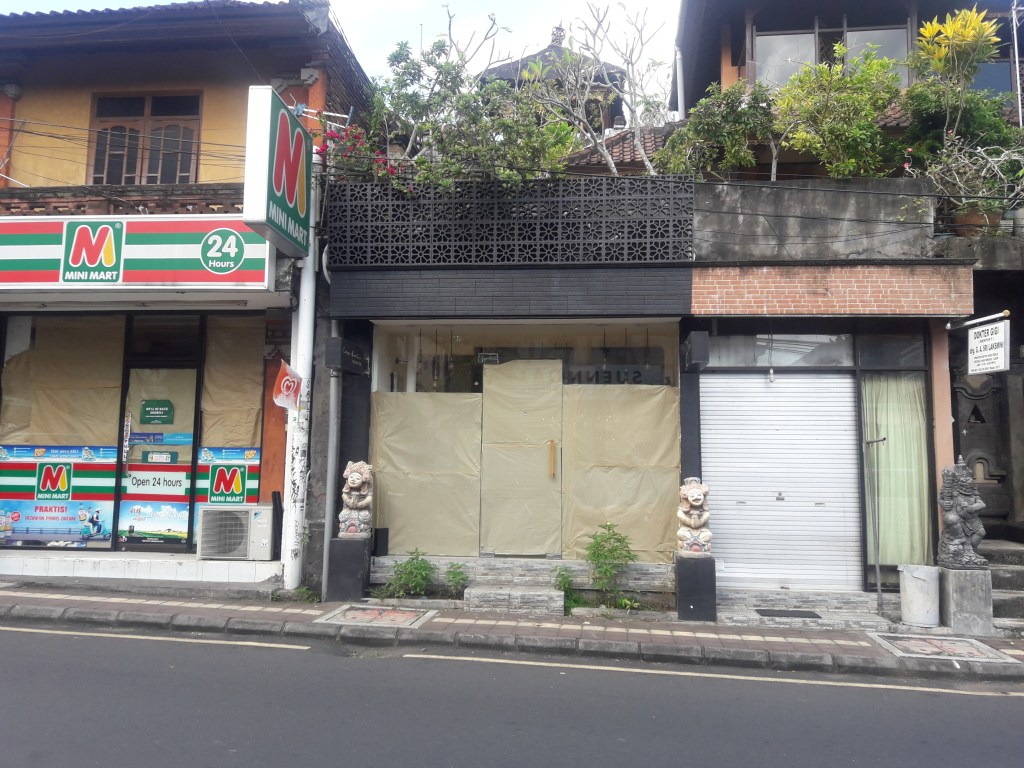
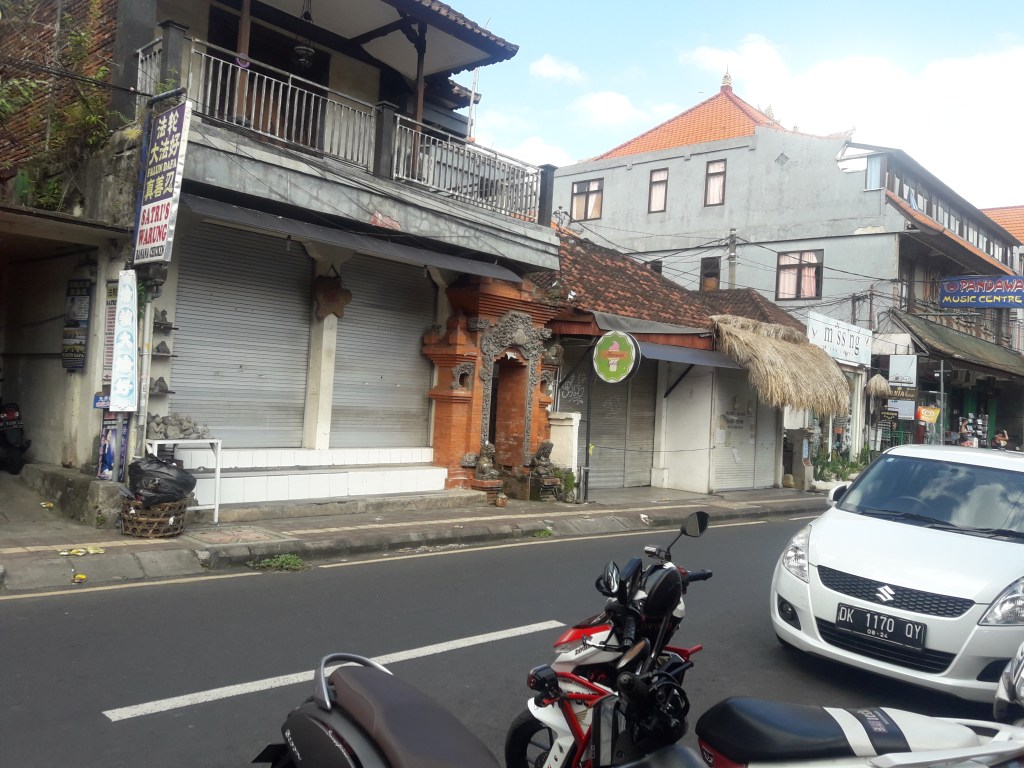
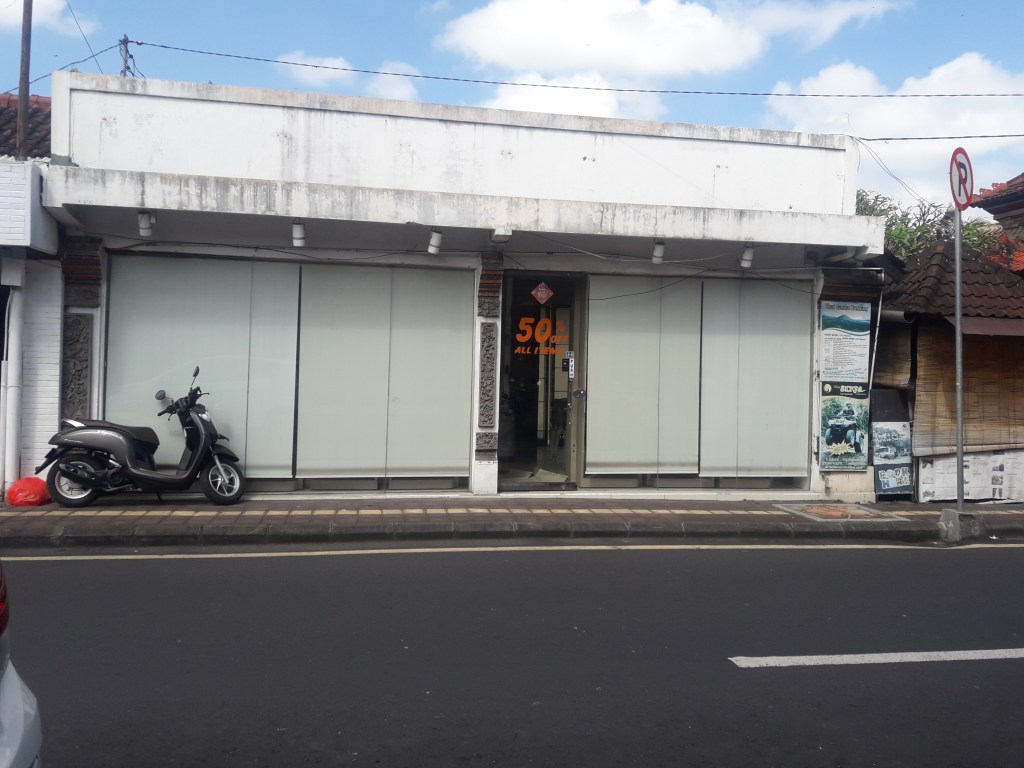
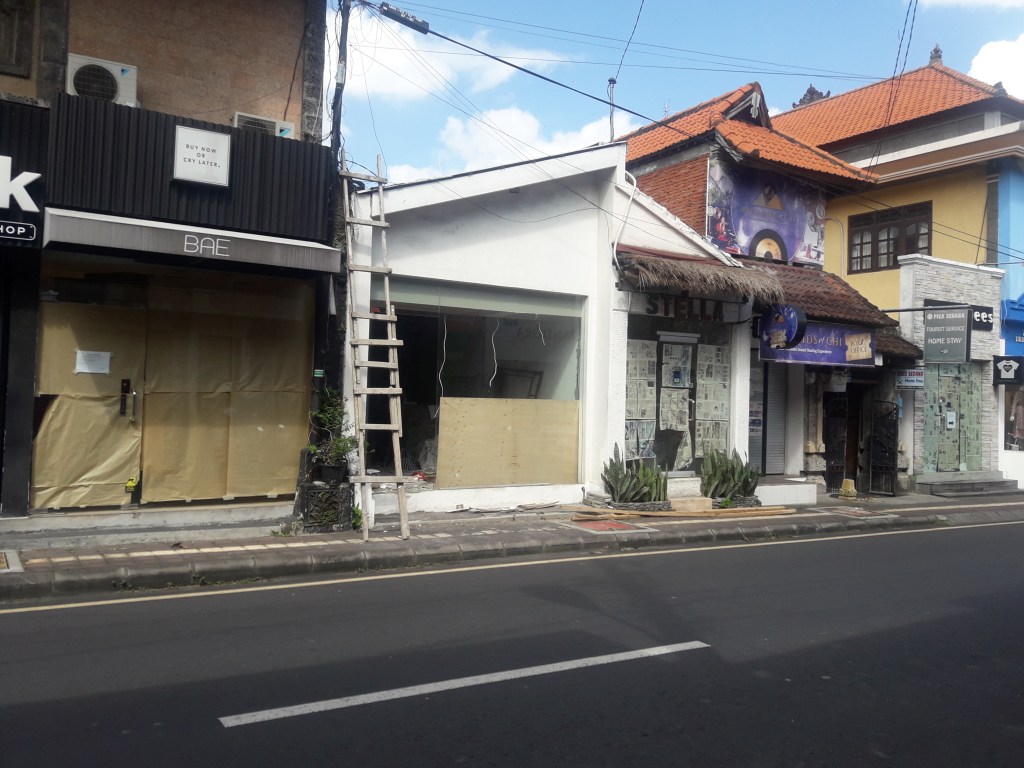
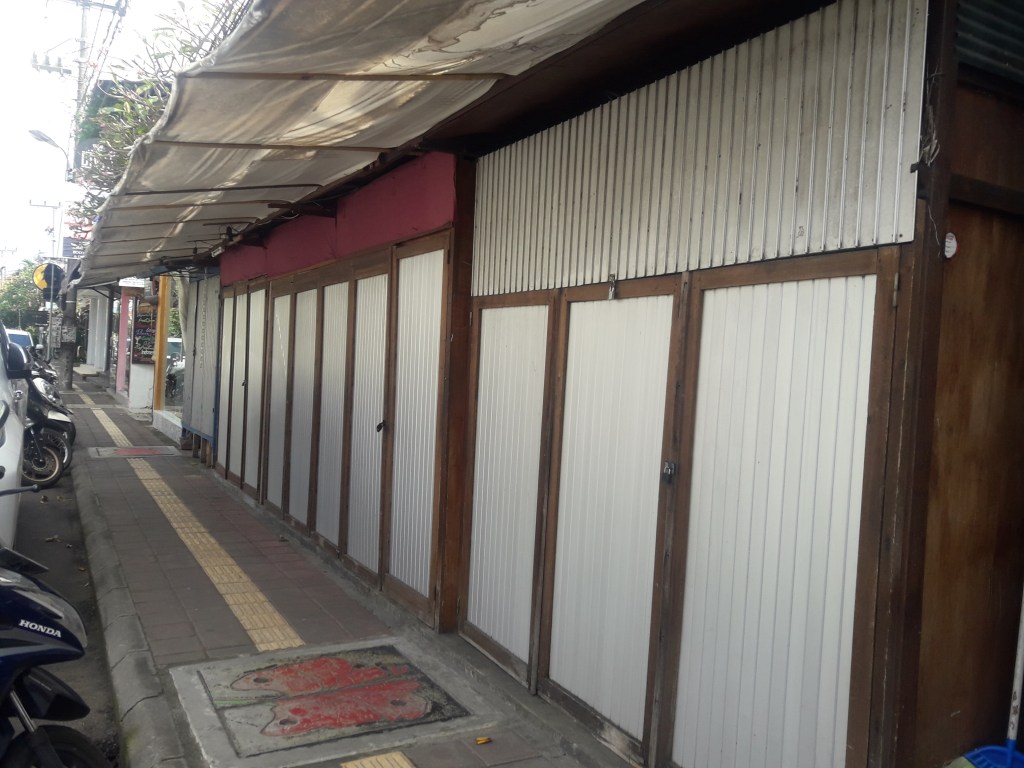
Today my walk took me along Monkey Forest Road. Normally at 2:00 in the afternoon this time of year the sidewalks are crammed with tourists and exhaust from cars and motorbikes inching their way along Ubud’s narrow streets clogs the air. COVID has changed all that.

There wasn’t a single moving vehicle on this stretch, and I was the only pedestrian.

It takes a fair amount of numbing to manage the silence without feeling like a dream has died. So many dreams. I tell myself to enjoy the peace while it lasts only to remember the article I read that said recovery may take two years.

That’s a lot of peace.

It isn’t just here. Ubud is a snapshot of the rest of the world. As I walked I tried to imagine how I could force a positive spin on this situation, at least for Bali. There are thousands of unemployed who are in desperate need of the basics for survival. Some have gardens so food for them isn’t a worry. The ingenuity of others has spawned new services. But for the vast majority…

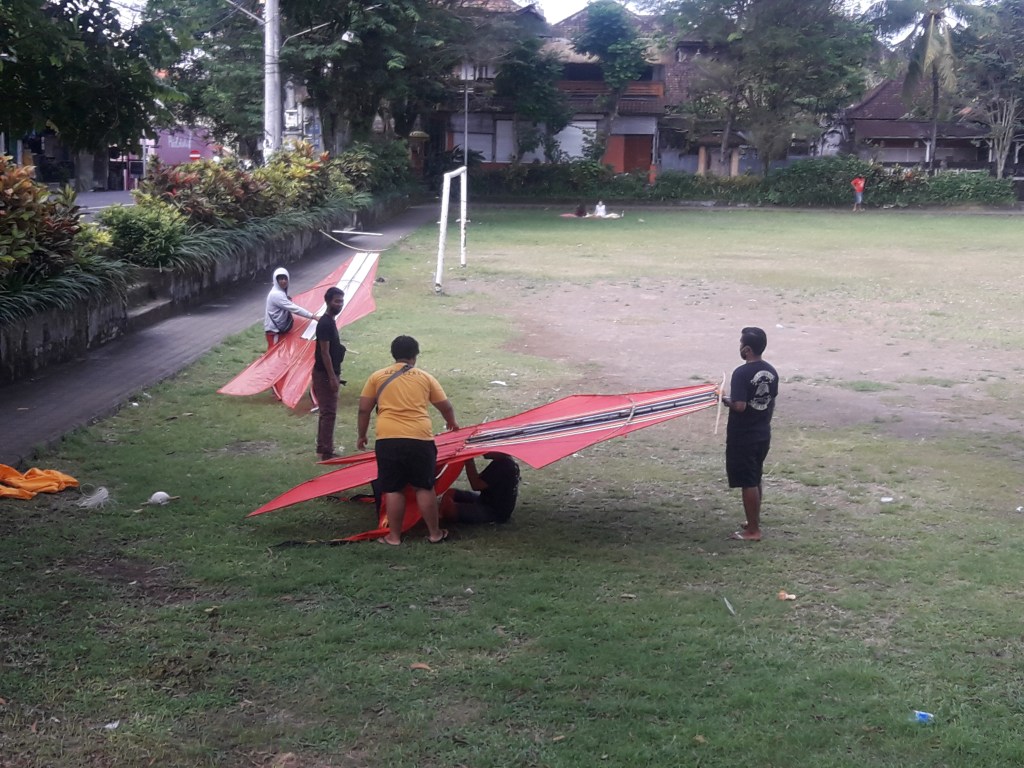
As I passed the soccer field I had my answer. If there’s no work, there’s an over-abundance of one commodity: time.

Plenty of time to fly kites.

Previous Older Entries Next Newer Entries