A Dive into Literary Fiction – Exploring The Salt Line

From time to time, I stumble upon a book that leaves an indelible mark. The Signature of all Things, The Ibis Trilogy (three books), Krakatoa, and many others. I’ve kept a record of everything I’ve read since 2019. There are 195 books on that list. 

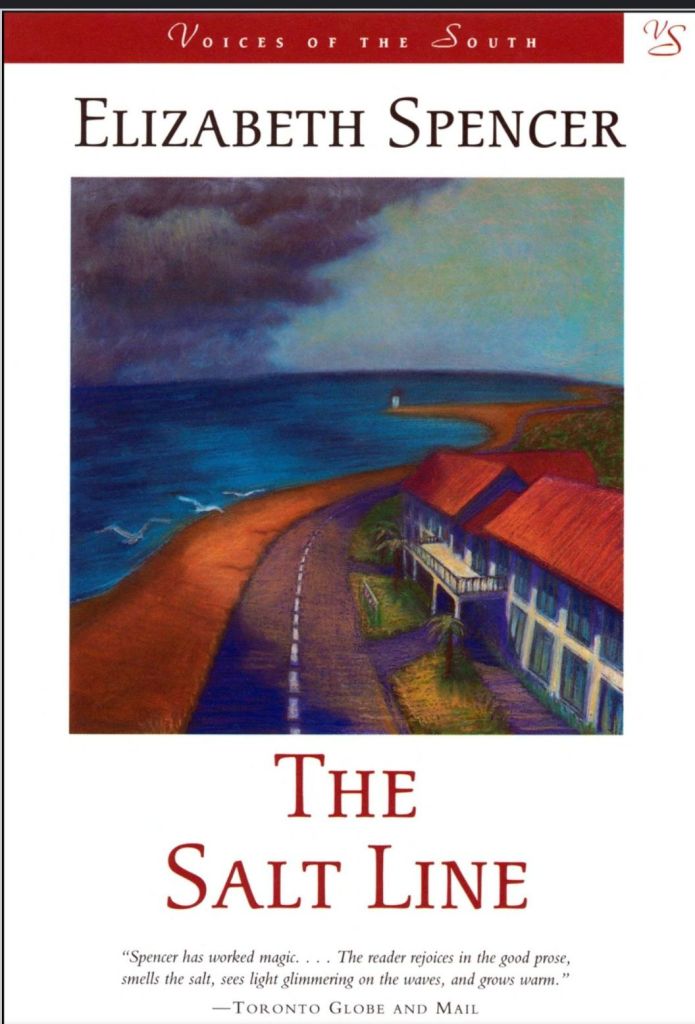
The latest is The Salt Line by Elizabeth Spencer. You know how you breeze through some novels without really thinking. Others keep you suspended on the edge of your chair, gut churning, not wanting to know what happens but needing closure. 
Then there is that lofty genre appropriately called literary fiction. It is the brilliant crafting of sentences, the complexity of characters, and the thematic depth of a plot that commands consistent attention, or you find yourself going back several pages to pick up where you lost the trail.

The Salt Line is an exquisite work of that genre. It’s difficult to call anything similar to mind. I’ve rarely found myself paying attention to every word because there were no extras. No fluff. To follow the intricacies of the narrative, I couldn’t skim. The characters were multifaceted to the extent that my loyalties shifted as the author developed and expanded upon their personalities.  

Arnie Carrington, the protagonist, is a former professor and 1960s campus radical. After Hurricane Camille devastated the coast between Biloxi, Mississippi, and Gulfport, he is eager to rebuild and attract new business to the area. The characters in The Salt Line are busy reckoning with old ghosts, liberating repressed passions, and figuring out life after trauma. 

True to the genre, Spencer doesn’t offer neatly tied-up endings for the individuals in her story. It is more about the unfolding of their journeys. None of them remains unchanged. 

In that way, it mirrors us. We, too, are changed by the paths we take and the choices we make. Some of us are intentional about who we are and where we want to go. Our goal is clear, and the steps to achieve it are orderly and systematic. Others of us are dreamers. We sense adventure and trust destiny to show us the way. And there are the lost souls who wander without a goal and without a dream, allowing life to happen to them. All types find representation in The Salt Line. Perhaps you’ll see yourself there.

Turn Myself Around Again

There’s a song, Fall Down as the Rain, that my daughter, Jessa, sang at my father’s funeral with Dan, her partner, who was also the guitarist. It’s about the seasons of life and the inevitable beauty of death. Today, that song has been playing in my head. I’ve turned myself around yet again.

………………………….

I wanted to write. I needed to write. But I was hopelessly uninspired until I started reading Unreasonable Hospitality

The book tells the story of a restaurateur in New York City who wanted his restaurant to be extraordinary; the best in the world. The first year, at the annual awards ceremony for the fifty best restaurants, his was number 50. He agonized over how he could improve his game. The chef was exceptional, and the food was already exquisitely gourmet. He decided he would focus on the guest experience, upping the ante to provide unreasonable hospitality to his patrons. And if they were to be treated to the ultimate in service and graciousness, the staff would also deserve to be deeply respected and appreciated. 

He devised a plan and implemented it. The following year, his restaurant was voted number one.

Reading his story made me aware that the events of the past few weeks have jettisoned my life into the realm of the extraordinary once again. Suddenly, I wanted to write about it, to tell anyone who would listen about this sudden, wild, and spontaneous adventure that came out of nowhere.

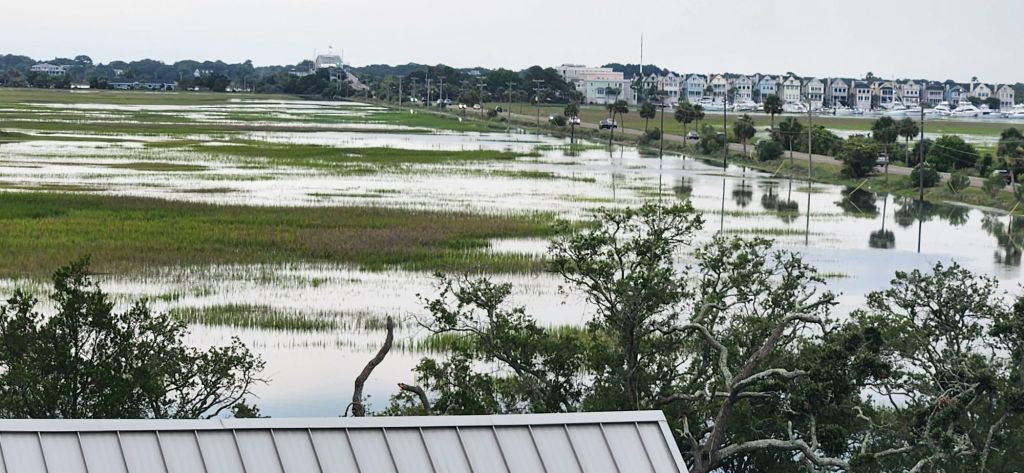
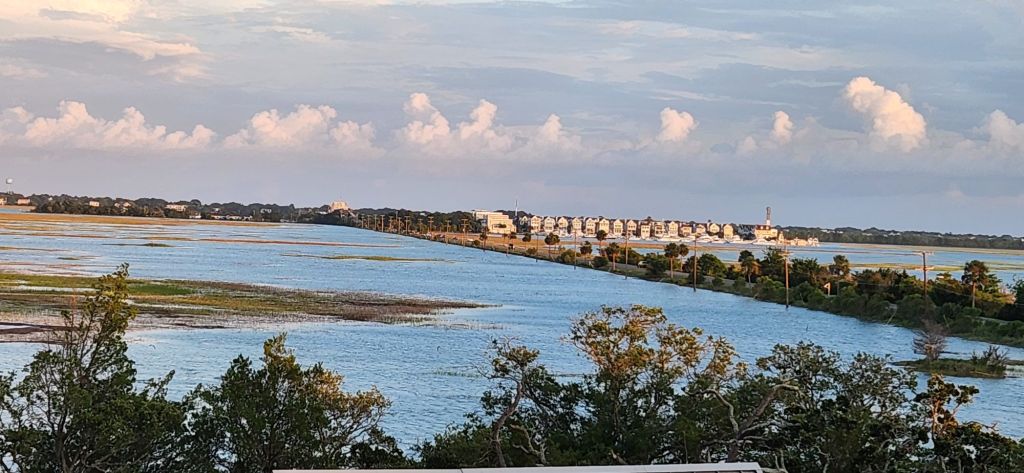
Take right now, for instance. I’m sitting in a 4th-floor, luxury apartment overlooking the coastal lowlands of South Carolina. At high tide, the view from my balcony looks like this.

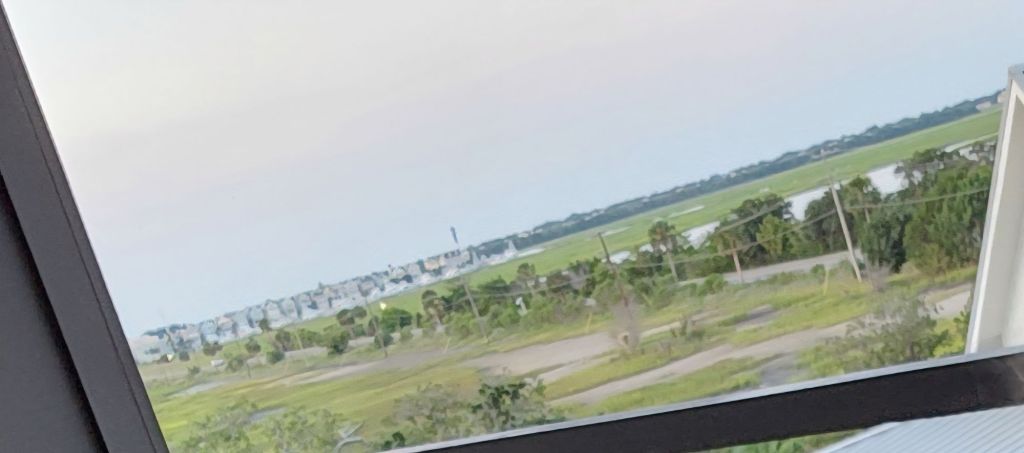
Low tide drains those sparkling pools.

This is a trial run, a test to see if a permanent move here is viable for me. I’ve been three winters and almost four summers in the remote northland of Minnesota, where my neighbors are my sister, brother-in-law, and an old friend of the family who moved there shortly after I did. Acres of field and forest stretch between our little community and the next house.

I fell asleep to the lonely wailing of coyotes and woke up in an alternate universe – turned myself around again.

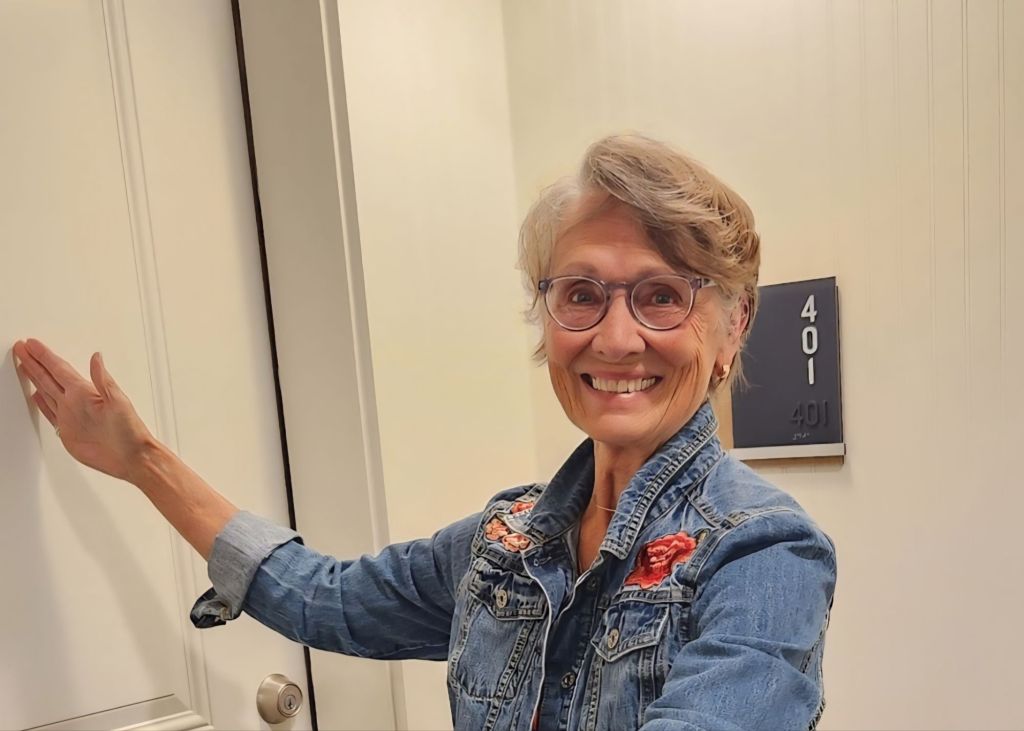
When I landed in Charleston, my daughter whisked me across two bridges into the town of Mt. Pleasant and this complex of 224 units. I instantly had new neighbors. From the balcony, I could watch bikinis worn by tanned, toned, young bodies strolling to the pool, and slow-shuffling gray heads walking their shihtzus and corgies. Instead of the mile-long, dead-end dirt road to my little cottage on the farm, Ben Sawyer Boulevard, with its non-stop beach traffic, hummed day and night. 

I’m revisiting old prejudices. Whatever I had against air-conditioning in the past is passé. With the heat and humidity hovering in the nineties 24/7, AC moves from nice to necessary! I’ll acclimate. It just takes time. But I will say this: it beats nine months of Minnesota winter any way you slice it! 

Despite sucking soupy salt air into my lungs with each breath, I love it here! Everything is easy and accessible. The Publix grocery store is a few blocks away. There’s a Mexican restaurant even closer with superb spicy margaritas! And the amenities available to residents are unreal. There’s a pool, a fitness gym, a yoga studio, a conference area, work stations, a lounge, and a whole corral of bicycles to use whenever the spirit moves. A beautiful courtyard on the 2nd floor of my building screams PARTY TIME!!!

Valet trash pickup comes to my door, and a package delivery service, FETCH, does too. There’s a free shuttle to the beach… I don’t know… does it sound a little too good to be true?

But here I am, and it IS true. All of it. 

The apartment doubles as my daughter’s office. I’ll have the added benefit of seeing her and my granddaughters regularly. That’s what kicks this into the ultra-extraordinary category. If I make this permanent, I’ll get to be here. With them. 

None of it was planned. I didn’t see it coming. But Uranus moved into Gemini on July 7th, where it will remain until November 7th, and as the renowned astrologer, Steven Forrest says, The shock of the unexpected will be everywhere, in the headlines and in your own life.

It’s only August 1st. There are three more months of potential shocking unexpectedness. One could get dizzy with all this turning around!

Author’s Page

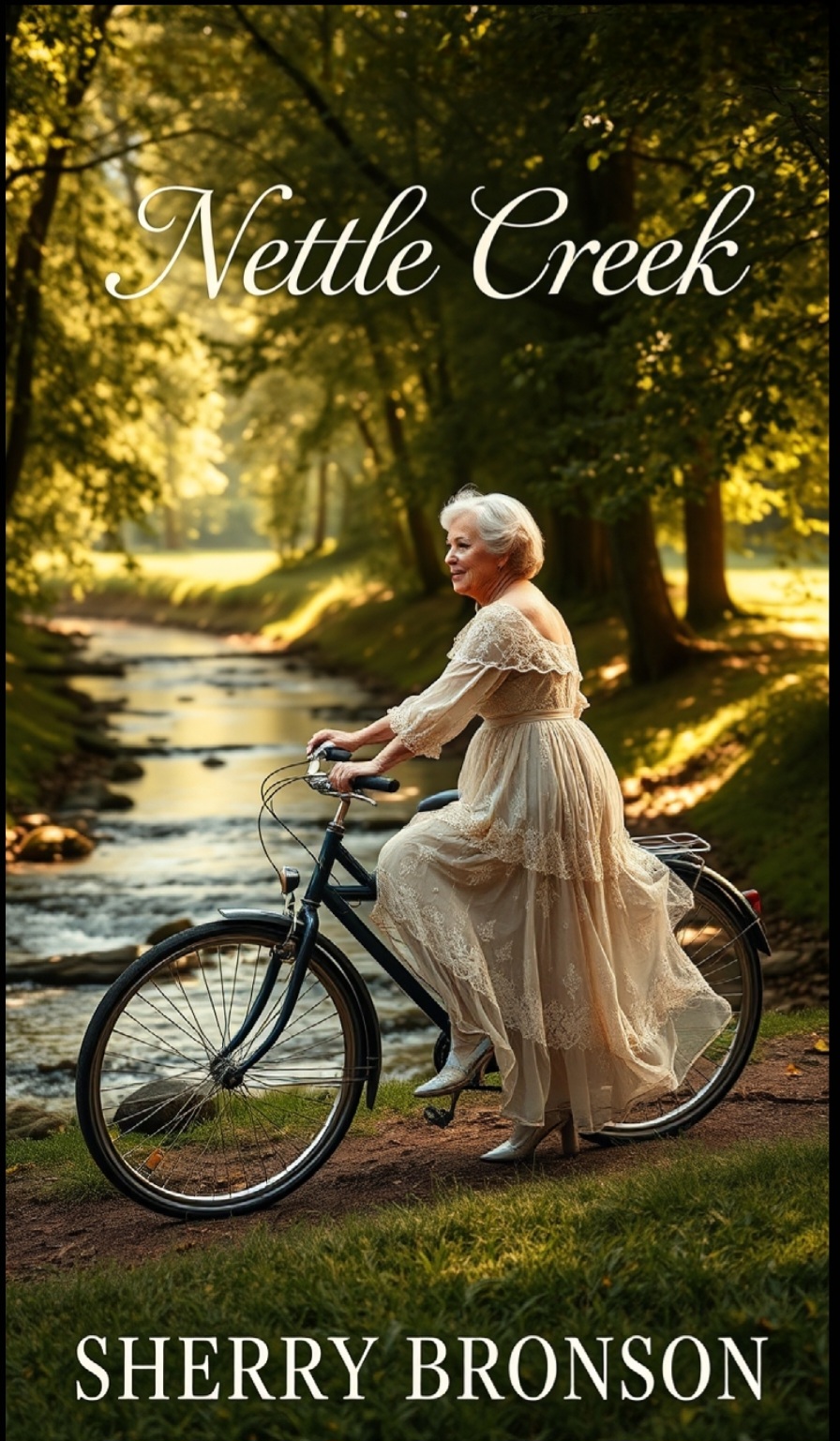
I’ve published Nettle Creek!

This image has an empty alt attribute; its file name is screenshot_20250426_124408_photo-editor.jpg

About the book:

Her mother died in a car crash when Stella was an infant, at least that’s the story she’s been told. Raised by her wealthy, charismatic father in the financial district of Manhattan, Stella Tarner matures tucked away in the actuarial department of John Tarner’s insurance empire. Socially awkward, she calculates risk for the company and remains invisible in her father’s shadow.

When her John Tarner suffers a fatal heart attack, Stella is catapulted to the position of CEO of Tarner Enterprises, and her life abruptly changes. A letter from the corporate attorneys advises her that Ryebrook Psychiatric Institution has received an inquiry. Hazel Bestcomb of Nettle Creek, Minnesota, is looking for the daughter of Gelda Essling Tarner.

None of it makes sense, unless.…

Is her mother alive? That’s not possible. Her father wouldn’t have lied to her, would he?

Stella hurries to Nettle Creek to investigate. Her interactions with the locals in that small midwestern community affect Stella deeply. Hazel, a transplant from rural Tennessee, becomes Stella’s quirky confidant.

While there, Stella visits Al, her father’s best friend from college. She stays at Judd Swanson’s B&B and meets Judd’s cousin, Tilly, The deeper she delves into the intrigue of her mother’s life, or death, the more tangled the web of lies and deception becomes.

Unaccustomed to the friendly openness of the women of Nettle Creek, and thrown off balance by the men, Stella slowly awakens to unexplored parts of herself, some uncomfortable, some thrilling. Unexpected feelings emerge and jolt her psyche. She flees back to the familiar anonymity of New York to sort herself out.

The twists and turns of this fast-paced mystery romance create a riveting page-turner.

Order the print paperback ($15.99) from Barnes and Noble at the link below: https://www.barnesandnoble.com/w/nettle-creek-sherry-bronson/1147435725?ean=9798231205721

Order the E-book ($9.99) here: https://books2read.com/u/3LQ091

Please leave a review when you have finished reading.

Do I have the right to IMAGINE you?

I wish I could speak with ironclad certainty about the right of fiction writers to portray anyone, from any culture, in any way we wish. In her opening address at the Brisbane Writers Festival, Lionel Shriver, a celebrated U.S. author, adamantly took that stance. Her argument appeared sound: the genre is fiction, therefore it’s made up, imaginary, and nobody should take offense.

I’ve pored over her speech and studied the uproar of commentary it incited. Do you remember the movie, Fargo, now a television series by the same name? The Coen Brothers created the film and billed it as a true story. Here was a movie about my state, my peeps, getting rave reviews. I couldn’t wait.

I’d heard it called scathing social satire, but that didn’t prepare me for the film’s insulting portrayal of people, dare I say it, like me. I couldn’t separate myself from the exaggerated Scandinavian backwoods brogue littered with you betcha, golly,and gee whiz. But the problem went beyond a personal affront. People all over the world watched it and formed an opinion of Minnesota, a state of hicks who talk funny and are a little stupid, but really, really, nice. Nobody sat beside them saying, “This is a farce, a parody, people there aren’t like that, seriously they’re not!” It was cultural appropriation at its box-office best.

We can’t help ourselves. We believe what we read, see, and hear in the media. If we don’t swallow it whole, there’s an impression left in our mental data banks that sticks.

So I had a problem when Ms. Shriver, from a position of white American privilege, told the rest of the world in so many words: Shame on you for feeling marginalized. This is fiction. It isn’t about you, it’s about the author’s freedom to IMAGINE you.

Is she right?

Don’t we all love story? What if the freedom to imagine and create is censored, given walls, boundaries, taboos?

I didn’t like my group being portrayed in an unflattering way. Who does? And yet I’m a creative writer and imagining is what I do. I invent unsavory characters as well as quirky, funny, bumbling, brilliant, and dull ones. I visualize them in skin: tanned, pale, olive, sallow, wrinkled, white, brown. I identify them ethnically, socially, culturally, and by their own, unique voice. I give them place and purpose and bring them to life. It’s never my intent to ridicule or malign others. But have I unwittingly done that by creating people who are nothing like me?

How I love getting lost in a book that someone else has imagined, living with those characters in their reality while momentarily escaping my own. And how I love to create story, allowing my normally serious mind to come out and play, to run with abandon waving my magic wand as my dreamed-up people populate the pages and live and breathe before my eyes.

It’s scary when I extrapolate the issues of cultural appropriation in fiction to various possible outcomes. What if we were banned from writing anything but what we have personally experienced? Memoir would be off limits unless the only character was me. As soon as I introduced another person, an ex-husband, mother-in-law, one of my children, and shined my prejudices upon them, whether in a positive or negative light, zap! Guilty!

The fact that literary festivals are springing up all over the world, and writers are being introduced cross-culturally to a degree never before possible, brings issues of sensitivity to the forefront. Years ago, when authors wrote for a small segment of the population: those who could afford to buy books and also knew how to read, this was a moot point. But now that events bring writers and readers together world-wide, and literacy rates are increasing, those who have been portrayed in ways that don’t ring true to what they believe about themselves, are speaking out.

I get an uneasy feeling in my gut when the word censorship is bandied about. As a writer I come down solidly on the uncensored side of the debate. As a human being who identifies with a specific place and a distinct heritage, I’m torn. Cultural appropriation is a valid issue and one that won’t resolve anytime soon. Pandora’s Box has been flung open and as we say in Minnesota, who knows where the chickens will come home to roost.

How does this strike you?
Have we gone over-the-top with cultural appropriation, politically correct, sensitivity issues? Or have we barely scratched the surface of a necessary heightened awareness of The Other. Please share your thoughts.